How Basis Turned Everyday Customer Conversations into Product Roadmap through Planhat

Basis Technologies
Basis Technologies
51-200 Employees
Scale-up
51-200 Employees
Scale-up
Headquarters
Chicago, IL
Headquarters
Chicago, IL
Switched to Planhat
2022
Switched to Planhat
2022
HighlightED Processes
Basis is a digital media automation platform serving thousands of advertising agencies and businesses globally—its customers’ campaigns have driven every major consumer and political trend of the last twenty years. Customer conversations were full of product insight and strategic signals, but the team needed a way to turn them into action instead of manual preparation.
Share
Challenge
The tooling underneath Basis’ ambition didn't match it. Customer data was fragmented across multiple customer success platforms, each with its own views; individual team members kept their own Notes pages to fill the gaps; and customer communication was split across email, Teams, and Slack.
The practical cost showed up most clearly in preparation—assembling a single quarterly business review meant pulling from several sources and building decks by hand, manual work that existed purely to make a conversation possible.
Before Planhat I was not being as efficient as I could be because I was spending my time piecing together sources of information from many different platforms.”
“
Share
The tooling underneath Basis’ ambition didn't match it. Customer data was fragmented across multiple customer success platforms, each with its own views; individual team members kept their own Notes pages to fill the gaps; and customer communication was split across email, Teams, and Slack.
The practical cost showed up most clearly in preparation—assembling a single quarterly business review meant pulling from several sources and building decks by hand, manual work that existed purely to make a conversation possible.
Before Planhat I was not being as efficient as I could be because I was spending my time piecing together sources of information from many different platforms.”
“
The tooling underneath Basis’ ambition didn't match it. Customer data was fragmented across multiple customer success platforms, each with its own views; individual team members kept their own Notes pages to fill the gaps; and customer communication was split across email, Teams, and Slack.
The practical cost showed up most clearly in preparation—assembling a single quarterly business review meant pulling from several sources and building decks by hand, manual work that existed purely to make a conversation possible.
“Before Planhat I was not being as efficient as I could be because I was spending my time piecing together sources of information from many different platforms.”
Solution
Solution
Planhat pulled the fragments into one working record per customer: email communication, usage and revenue trends, in-flight opportunities and their status, and the running history of challenges and feedback. On top of that consolidated base, the team built its own, personalised measurement layer.
Custom formula fields and calculated metrics track revenue trends year over year and seven days over seven days; custom scores go beyond the standard health score to measure adoption of specific features, share of revenue, and how deeply each customer uses different parts of the Basis platform—with the usage inputs flowing in through their Pendo integration.
The dashboards built on those scores work at two altitudes. Customer-facing account managers use them to plan their days and prioritise within their book of business: where customer needs are shifting, where revenue is growing or declining and needs action. Leadership uses the same data at portfolio level—trend visualisations, custom flags like days remaining on a contract, and revenue share broken down by parts of the platform.
The automation that Planhat brings our customer experience organisation has allowed us to truly be proactive with our customers—shifting away from the administrative and reactive mindset and into the strategic and innovative mindset that we strive to achieve.”
“
Share
Planhat pulled the fragments into one working record per customer: email communication, usage and revenue trends, in-flight opportunities and their status, and the running history of challenges and feedback. On top of that consolidated base, the team built its own, personalised measurement layer.
Custom formula fields and calculated metrics track revenue trends year over year and seven days over seven days; custom scores go beyond the standard health score to measure adoption of specific features, share of revenue, and how deeply each customer uses different parts of the Basis platform—with the usage inputs flowing in through their Pendo integration.
The dashboards built on those scores work at two altitudes. Customer-facing account managers use them to plan their days and prioritise within their book of business: where customer needs are shifting, where revenue is growing or declining and needs action. Leadership uses the same data at portfolio level—trend visualisations, custom flags like days remaining on a contract, and revenue share broken down by parts of the platform.
The automation that Planhat brings our customer experience organisation has allowed us to truly be proactive with our customers—shifting away from the administrative and reactive mindset and into the strategic and innovative mindset that we strive to achieve.”
“
Planhat pulled the fragments into one working record per customer: email communication, usage and revenue trends, in-flight opportunities and their status, and the running history of challenges and feedback. On top of that consolidated base, the team built its own, personalised measurement layer.
Custom formula fields and calculated metrics track revenue trends year over year and seven days over seven days; custom scores go beyond the standard health score to measure adoption of specific features, share of revenue, and how deeply each customer uses different parts of the Basis platform—with the usage inputs flowing in through their Pendo integration.
The dashboards built on those scores work at two altitudes. Customer-facing account managers use them to plan their days and prioritise within their book of business: where customer needs are shifting, where revenue is growing or declining and needs action. Leadership uses the same data at portfolio level—trend visualisations, custom flags like days remaining on a contract, and revenue share broken down by parts of the platform.
“The automation that Planhat brings our customer experience organisation has allowed us to truly be proactive with our customers—shifting away from the administrative and reactive mindset and into the strategic and innovative mindset that we strive to achieve.”

request a demo
Meet your new system of action
Book a 30-minute call to discover why Planhat is the #1 platform for capturing demand, converting revenue and compounding customer value — from pipeline to lifetime.
request a demo
Meet your new system of action
Book a 30-minute call to discover why Planhat is the #1 platform for capturing demand, converting revenue and compounding customer value — from pipeline to lifetime.
request a demo
Meet your new system of action
Book a 30-minute call to discover why Planhat is the #1 platform for capturing demand, converting revenue and compounding customer value — from pipeline to lifetime.
Outcomes
Outcomes
The consolidation materializes in three places: how prepared the team is for every customer conversation, how customer feedback travels from CS conversations into the product roadmap, and how the team spots risk and opportunity before customers raise it.
So what we've been able to do is analyse how our revenue has been tied to this particular change, or how customer's revenue has been tied to this particular change, and help us identify where we need to have some more strategic changes on their advertising campaigns.”
“
Share
The consolidation materializes in three places: how prepared the team is for every customer conversation, how customer feedback travels from CS conversations into the product roadmap, and how the team spots risk and opportunity before customers raise it.
So what we've been able to do is analyse how our revenue has been tied to this particular change, or how customer's revenue has been tied to this particular change, and help us identify where we need to have some more strategic changes on their advertising campaigns.”
“
The consolidation materializes in three places: how prepared the team is for every customer conversation, how customer feedback travels from CS conversations into the product roadmap, and how the team spots risk and opportunity before customers raise it.
“So what we've been able to do is analyse how our revenue has been tied to this particular change, or how customer's revenue has been tied to this particular change, and help us identify where we need to have some more strategic changes on their advertising campaigns.”
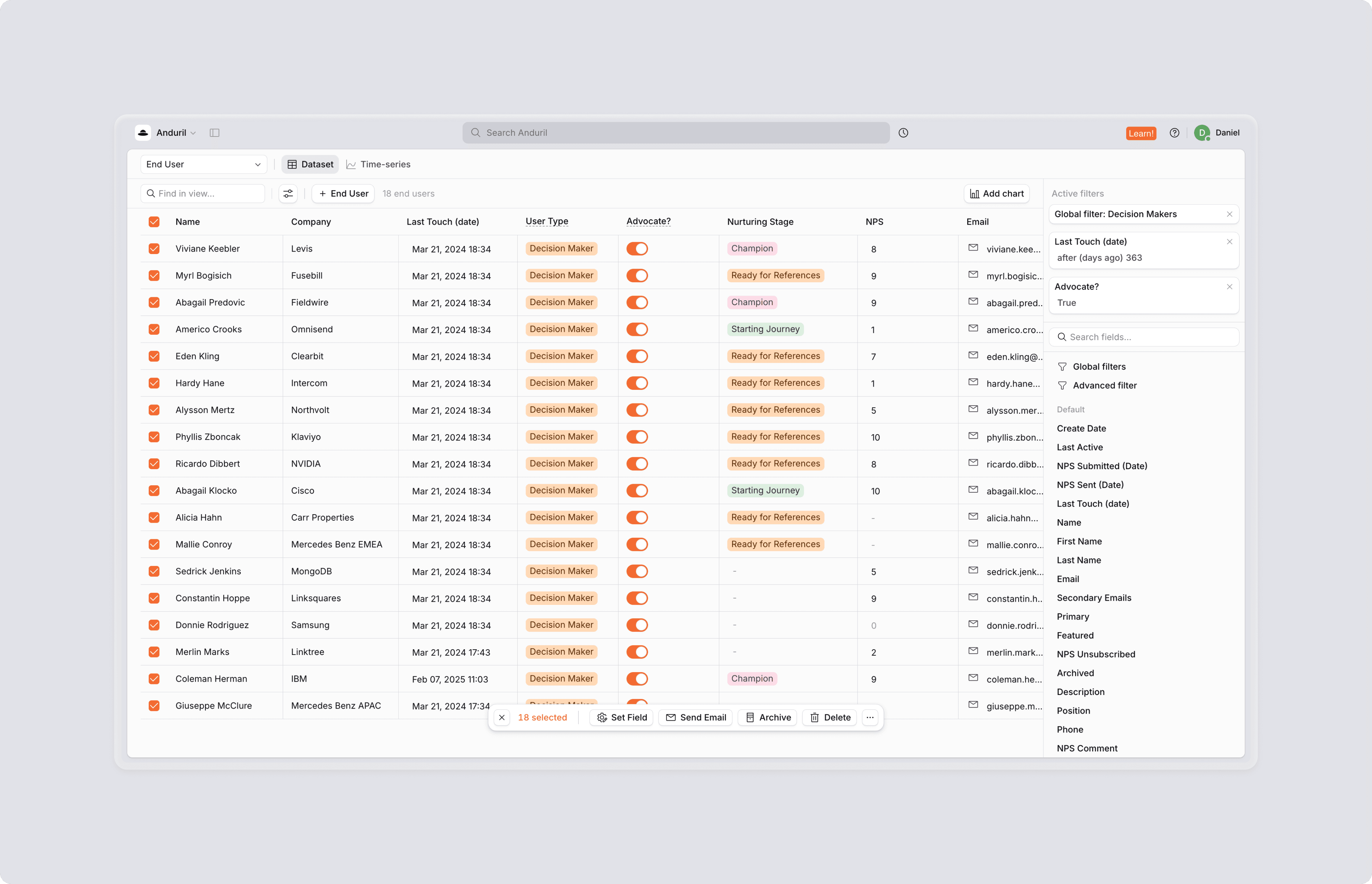
A quarterly business or partner review used to mean pulling from multiple sources and assembling a deck by hand; the same work now happens in minutes, because everything the conversation needs is already in one view. The second-order effect is less measurable but equally important: walking into every interaction already knowing the customer's situation and the next step changes the quality of the conversation itself.
It's really helped me just become more comfortable and feel better about those conversations that I'm having with customers, because I know what my next step is going to be. I know what I'm getting on the call and talking through with that customer, and why it's going to matter to them, because I'm able to access all of those data points in one system”
“

A quarterly business or partner review used to mean pulling from multiple sources and assembling a deck by hand; the same work now happens in minutes, because everything the conversation needs is already in one view. The second-order effect is less measurable but equally important: walking into every interaction already knowing the customer's situation and the next step changes the quality of the conversation itself.
It's really helped me just become more comfortable and feel better about those conversations that I'm having with customers, because I know what my next step is going to be. I know what I'm getting on the call and talking through with that customer, and why it's going to matter to them, because I'm able to access all of those data points in one system”
“
A quarterly business or partner review used to mean pulling from multiple sources and assembling a deck by hand; the same work now happens in minutes, because everything the conversation needs is already in one view. The second-order effect is less measurable but equally important: walking into every interaction already knowing the customer's situation and the next step changes the quality of the conversation itself.
It's really helped me just become more comfortable and feel better about those conversations that I'm having with customers, because I know what my next step is going to be. I know what I'm getting on the call and talking through with that customer, and why it's going to matter to them, because I'm able to access all of those data points in one system”
“
CSMs hear product feedback every day—features customers like, things they'd change, gaps they want filled. Before, that intelligence did not go beyond individual conversations. Now it flows into the Ideas portal: a central register where each piece of feedback is logged with context (the request itself, and the challenges behind it) and assigned to the companies raising it. Because ideas are tied to accounts, the product team can see three things at a glance for any request—how many customers want it, what priority it carries, and the total revenue associated with the accounts asking.
The Ideas portal really helps centralize all of that and keep that data and assign it to different companies, so we can see things like what kind of impact this has, what the priority of those feature requests are, as well as what our total revenue associated with some of those ideas is.”
“

CSMs hear product feedback every day—features customers like, things they'd change, gaps they want filled. Before, that intelligence did not go beyond individual conversations. Now it flows into the Ideas portal: a central register where each piece of feedback is logged with context (the request itself, and the challenges behind it) and assigned to the companies raising it. Because ideas are tied to accounts, the product team can see three things at a glance for any request—how many customers want it, what priority it carries, and the total revenue associated with the accounts asking.
The Ideas portal really helps centralize all of that and keep that data and assign it to different companies, so we can see things like what kind of impact this has, what the priority of those feature requests are, as well as what our total revenue associated with some of those ideas is.”
“
CSMs hear product feedback every day—features customers like, things they'd change, gaps they want filled. Before, that intelligence did not go beyond individual conversations. Now it flows into the Ideas portal: a central register where each piece of feedback is logged with context (the request itself, and the challenges behind it) and assigned to the companies raising it. Because ideas are tied to accounts, the product team can see three things at a glance for any request—how many customers want it, what priority it carries, and the total revenue associated with the accounts asking.
The Ideas portal really helps centralize all of that and keep that data and assign it to different companies, so we can see things like what kind of impact this has, what the priority of those feature requests are, as well as what our total revenue associated with some of those ideas is.”
“
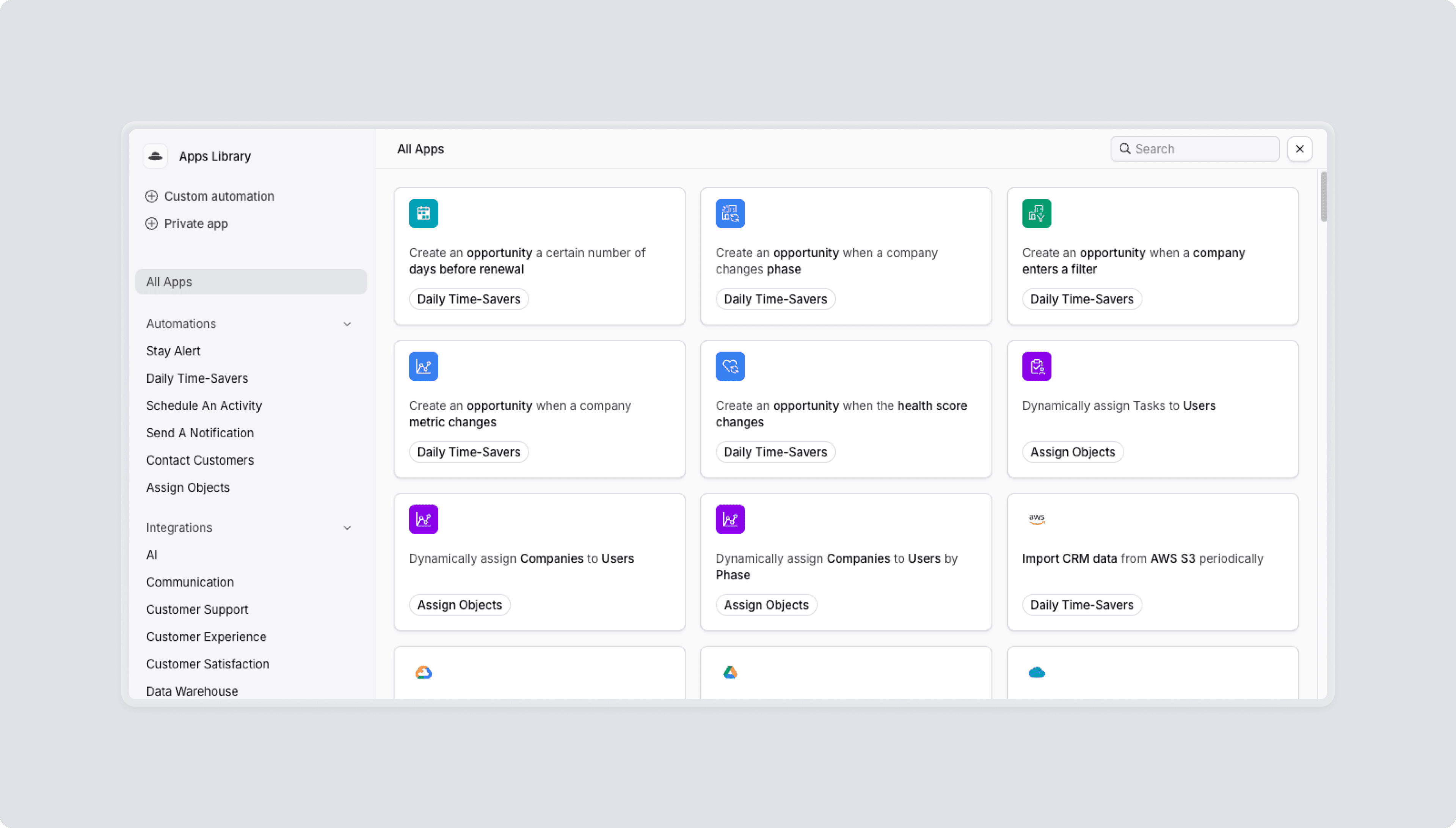
The custom scores turn the consolidated data into foresight, and the team bring customers insights they wouldn't otherwise get. One example is Google's change to cookies and browsers, which reshapes how digital advertisers can target. Using custom metrics, Basis scored how much of each customer's revenue is tied to that change, giving the team a per-account read on exposure and a clear list of where advertising strategies need to shift before the change bites rather than after.
We are able to sort of see the future of our business and go to customers with insights that they otherwise wouldn't get from us.”
“
The custom scores turn the consolidated data into foresight, and the team bring customers insights they wouldn't otherwise get. One example is Google's change to cookies and browsers, which reshapes how digital advertisers can target. Using custom metrics, Basis scored how much of each customer's revenue is tied to that change, giving the team a per-account read on exposure and a clear list of where advertising strategies need to shift before the change bites rather than after.
We are able to sort of see the future of our business and go to customers with insights that they otherwise wouldn't get from us.”
“
The custom scores turn the consolidated data into foresight, and the team bring customers insights they wouldn't otherwise get. One example is Google's change to cookies and browsers, which reshapes how digital advertisers can target. Using custom metrics, Basis scored how much of each customer's revenue is tied to that change, giving the team a per-account read on exposure and a clear list of where advertising strategies need to shift before the change bites rather than after.
We are able to sort of see the future of our business and go to customers with insights that they otherwise wouldn't get from us.”
“
Basis was piecing together customer insight from CS platforms, notes, email, Teams and Slack. Planhat turned those fragments into one working record, helping teams prepare for reviews in minutes and feed everyday customer feedback into the product roadmap.
Basis was piecing together customer insight from CS platforms, notes, email, Teams and Slack. Planhat turned those fragments into one working record, helping teams prepare for reviews in minutes and feed everyday customer feedback into the product roadmap.
Basis was piecing together customer insight from CS platforms, notes, email, Teams and Slack. Planhat turned those fragments into one working record, helping teams prepare for reviews in minutes and feed everyday customer feedback into the product roadmap.
More from Basis Technologies
request a demo
Meet your new system of action
Book a 30-minute call to discover why Planhat is the #1 platform for capturing demand, converting revenue and compounding customer value — from pipeline to lifetime.
request a demo
Meet your new system of action
Book a 30-minute call to discover why Planhat is the #1 platform for capturing demand, converting revenue and compounding customer value — from pipeline to lifetime.
request a demo
Meet your new system of action
Book a 30-minute call to discover why Planhat is the #1 platform for capturing demand, converting revenue and compounding customer value — from pipeline to lifetime.