01
Stability over volatility
02
Real customer collaboration
03
Actionable intelligence
Planhat
Odie
Odie's SuccessBLOC model typically requires managing multiple disjointed modules, increasing admin overhead and total cost of ownership. Planhat's unified data model consolidates Customer Success, Account Management, and Professional Services into a single workspace.
Gartner flags organisational volatility at Odie as a risk — with uncertainty in leadership and product direction leading to potential support gaps or forced migrations. Planhat offers a stable, predictable platform with a transparent roadmap.



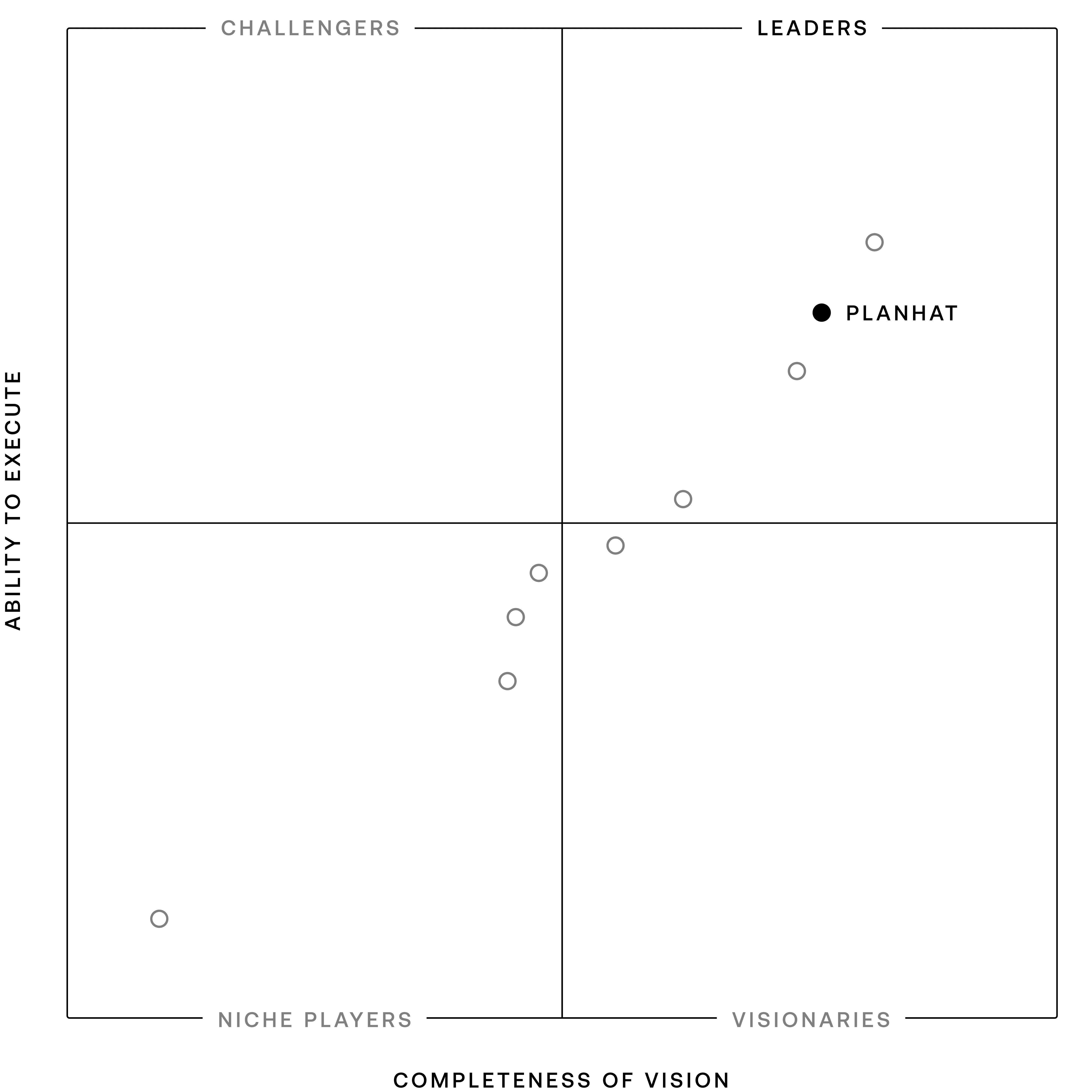
Gartner Magic Quadrant 2025
Gartner positions Planhat as a Leader in the 2025 Magic Quadrant, citing its ability to execute global deployments and sophisticated data architecture. Gartner explicitly cautions about organisational volatility at Odie following its merger with Catalyst and recent leadership changes.
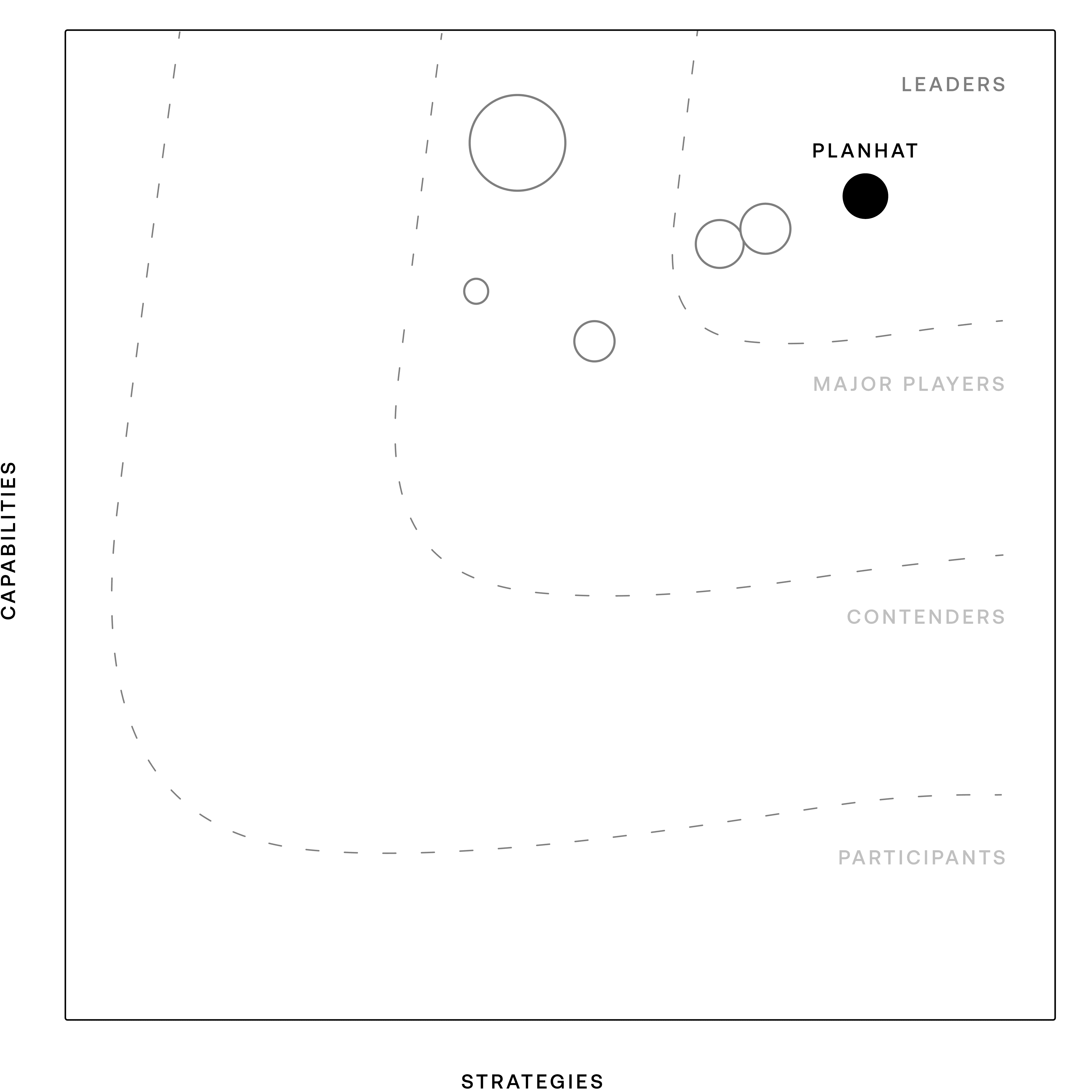
Gartner Critical Capabilities 2024
Planhat is rated 4.6/5 for collaboration by Gartner — providing secure two-way portals for shared projects and customer communication. Odie is rated 2.4/5, with primarily internal-facing capabilities.
When you're moving fast, you need a platform your team can own — not one that requires specialist admins to configure modules before you see value. Planhat goes live in under 8 weeks, run by your own Ops team.
If you're outgrowing Odie's modular SuccessBLOC approach, Planhat lets you add complexity only when you need it — on a unified platform, without the fragmentation.
Planhat is top-rated for scalability on Gartner — supporting complex global teams, multi-product hierarchies, and billions of time-series records, without the admin overhead.

01
Alignment on goals, success criteria, integrations, and your existing Gainsight structure — Company and Relationship objects, health score logic, playbooks, and user roles — to design the optimal Planhat environment from the outset.
02
Field-by-field mapping from Gainsight to Planhat objects. Your full history — Timeline activities, health score trends, usage logs, and Notes — migrated via flat file import, API, or native integration so context is preserved from day one.
03
Workspace layouts, dashboards, health scores, user roles, and permissions configured to your specifications. Your Rules Engine logic converted into Planhat's visual Automations — no custom code required. Branded Customer Portals available for client-facing deployment.
04
Migrated data, Health Score logic, workflows and Agents are validated with your team before launch. Pilot users give feedback before go-live.
05
Rollout follows a tried-and-tested induction with short user training. Teams start managing accounts in Planhat right away, with ongoing training and a free Power User Certification program for admins.
Which platform is faster to implement?
Planhat goes live in under 8 weeks on average, managed by your own Ops or GTM teams — no specialist admin, no mandatory consulting. Odie's SuccessBLOC model is designed for speed, but modular complexity typically delays real value delivery.
How do the platforms compare on AI?
Planhat is rated 4.3/5 for AI by Gartner — delivering embedded conversational intelligence, workflow automation, and an MCP server for custom LLM integration. Conversely, Odie is rated 2.7/5, with Gartner noting its AI execution currently lags behind its stated vision.
We rely on Odie SuccessBLOCs. What is the Planhat equivalent?
Planhat replaces rigid templated modules with a unified, flexible model — operationalised through configured Health Profiles, visual automation builders, and shared Customer Portals. Odie's SuccessBLOC approach typically requires managing multiple disjointed modules, increasing admin overhead and total cost of ownership in the process.
Which offers better customer collaboration?
Planhat provides real-time Customer Portals — collaborative micro-sites with vanity URLs — where customers access and collaborate around Success Plans, KPIs, and tasks directly, as if they were colleagues. Conversely, Odie's collaboration capabilities are primarily internal-facing, rated 2.4/5 by Gartner.
Are there risks staying with Odie?
Planhat offers a stable, predictable partnership — with consistent growth, financial stability, and a transparent roadmap. Conversely, Gartner explicitly cautions about organisational volatility at Odie following its merger with Catalyst, flagging risks around delayed features, support gaps, and limited global presence outside North America and Israel.
Will historical data be preserved when migrating?
Planhat's structured import tools map Odie's core objects — Accounts, Users, Tasks, and Touchpoints — directly, preserving engagement history and health trends. Migration typically completes in 4–6 weeks with no data loss.
Which is better for global organisations?
Planhat has strong partner presence and support across EMEA, North America, and APAC — supporting teams in 12 countries across 8 languages. Conversely, Gartner flags Odie's limited direct presence outside North America and Israel as a material risk for globally scaling teams.