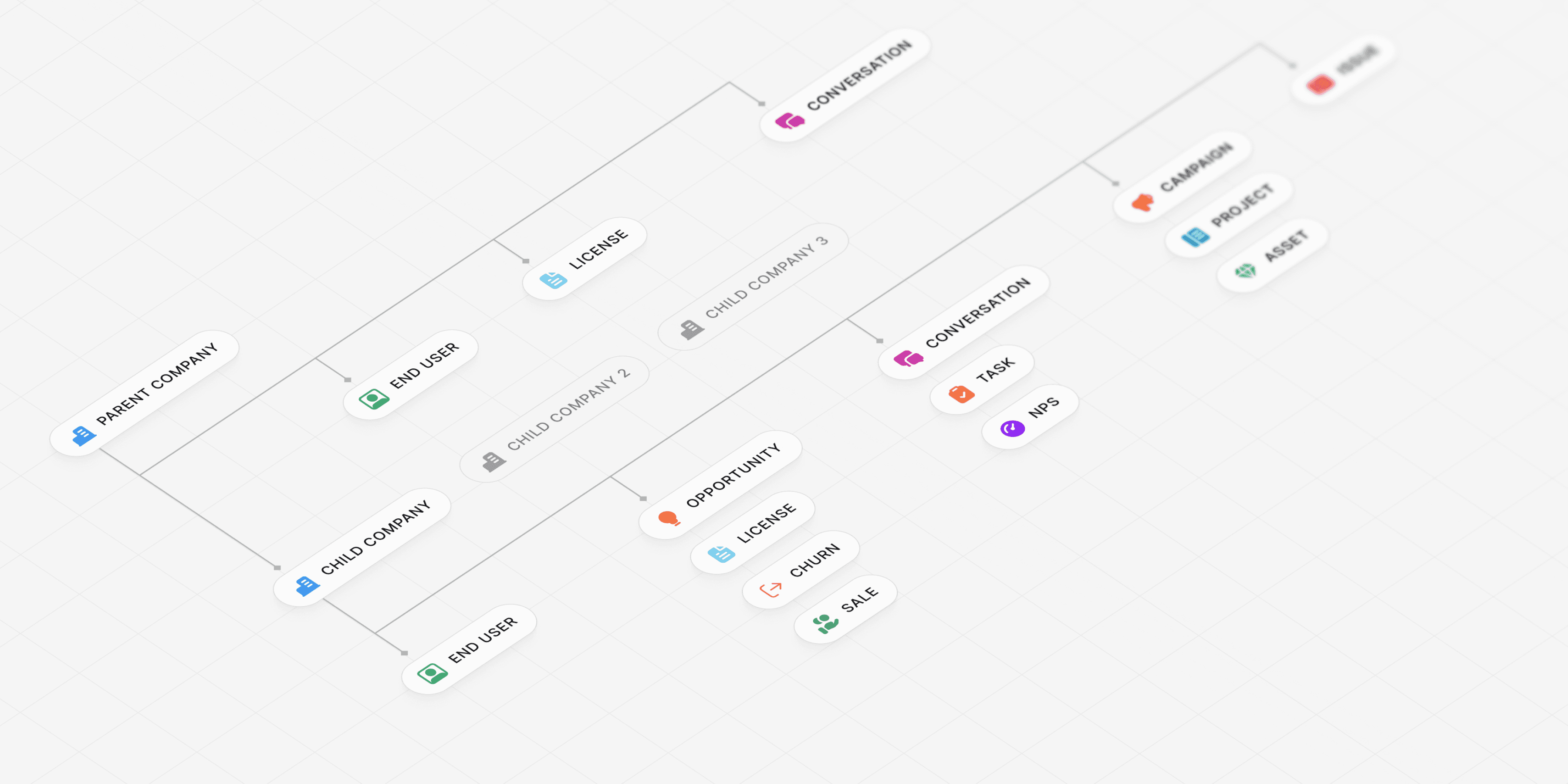
Unified Data Model
Today, customer-facing teams tend to live in silos across dozens of tools. Most of these platforms either lock you into static CRM objects or leave you building everything yourself - this is no longer enough. Planhat gives you conversations, collaboration, enablement and CRM data all in one place - flexibly ingested and automatically enriched. It’s a living home for your commercial activity, not just a store of record.
01
Mirror your business
Start with pre-built models like companies, end users, opportunities, and licenses, and add custom fields and generic models for whatever else you track - physical assets, shared objectives, or custom processes. Adapt them to your needs, enrich them, and apply automations.
02
Bring conversations and collaboration into the core
Emails, tickets, call transcripts, meeting notes, and shared documents live natively alongside your CRM data. They’re automatically summarised, searchable, and tied to the right customers or other commercial objectives.
03
Roll up data across complex hierarchies
Set up parent-child relationships (portfolios, regions, resellers) and automatically aggregate revenue, health scores, usage, open issues, or any custom metric to the customer - giving you a single view of the most important information.