Forward Deployed Engineers: Hire for the Last Mile, Build for the Long Run
Forward Deployed Engineers: Hire for the Last Mile, Build for the Long Run

A panel of deployment leaders explores when to hire forward deployed engineers and how customer work can improve the product.
Share
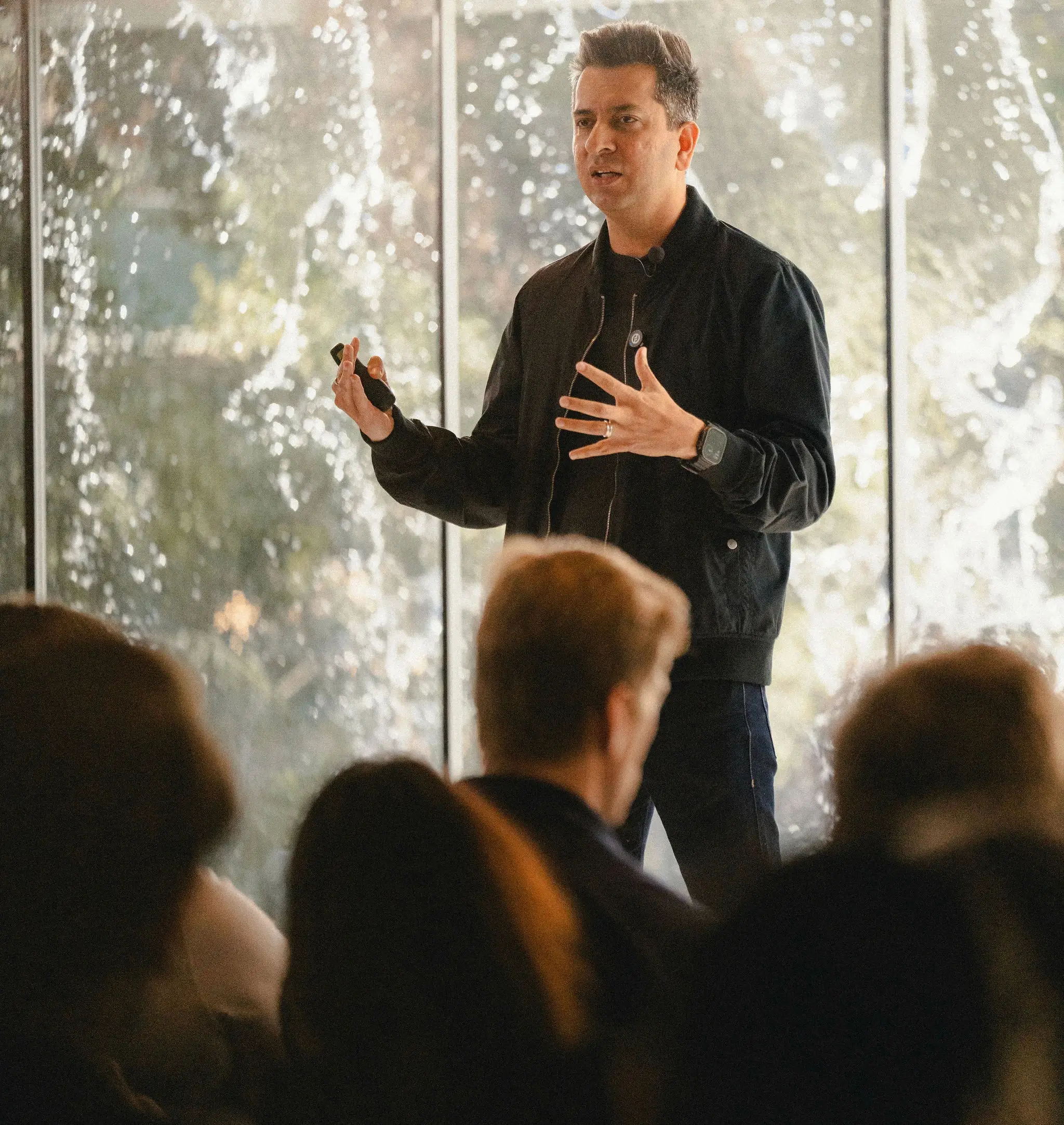
Based on a session at FRONTIER by Planhat, on 10 November 2026.
Enterprise AI can be technically impressive and still fail to deliver value. A customer may believe in the product yet struggle to make it work within their systems and processes. Closing that gap requires people who understand the customer’s objectives, build technical solutions and get them into production.
That’s the role of the forward deployed engineer (FDE). As AI products become more flexible and their enterprise deployments more complex, FDEs are increasingly responsible for turning software capabilities into working customer outcomes.
But the role comes with a challenge: How do you solve a customer’s immediate problem without creating a bespoke solution that becomes impossible to maintain or scale? The answer lies in treating deployment as part of product development, so the work performed for individual customers improves what the software can deliver to everyone.
The best FDEs solve the customer's problem today in a way that makes the product better tomorrow.”
“
Based on a session at FRONTIER by Planhat, on 10 November 2026.
Enterprise AI can be technically impressive and still fail to deliver value. A customer may believe in the product yet struggle to make it work within their systems and processes. Closing that gap requires people who understand the customer’s objectives, build technical solutions and get them into production.
That’s the role of the forward deployed engineer (FDE). As AI products become more flexible and their enterprise deployments more complex, FDEs are increasingly responsible for turning software capabilities into working customer outcomes.
But the role comes with a challenge: How do you solve a customer’s immediate problem without creating a bespoke solution that becomes impossible to maintain or scale? The answer lies in treating deployment as part of product development, so the work performed for individual customers improves what the software can deliver to everyone.
“The best FDEs solve the customer's problem today in a way that makes the product better tomorrow.”
When does a company need forward deployed engineers?
The need for FDEs depends on two characteristics of the product being deployed: how much customization it requires and how many people need to adopt it.
Some products deliver value with relatively little configuration. They need to be connected to existing business systems and set up correctly, but their functionality is largely complete out of the box. In these cases, a solutions engineer may be sufficient.
At the other end of the spectrum are products that require substantial customization to work within a customer’s environment. Their value depends on integrating systems, designing workflows or building capabilities around specific business requirements. This is where forward deployed engineers become essential.
The second consideration is adoption scale. Introducing AI across thousands of employees also requires specialists who can work with leadership, redesign workflows and coordinate change. At Sana, this informs the distinction between technical forward deployment and applied AI strategy.
At Planhat, the FDE function emerged from the needs of strategic enterprise customers. These customers had chosen the product and believed in its direction, but needed a partner to help them execute their business cases quickly. Planhat built a dedicated deployment team that works on site with customers, understands the desired outcome and develops the technical architecture required to achieve it.
Without that plan, every successful deployment creates another permanent support obligation.”
“
When does a company need forward deployed engineers?
The need for FDEs depends on two characteristics of the product being deployed: how much customization it requires and how many people need to adopt it.
Some products deliver value with relatively little configuration. They need to be connected to existing business systems and set up correctly, but their functionality is largely complete out of the box. In these cases, a solutions engineer may be sufficient.
At the other end of the spectrum are products that require substantial customization to work within a customer’s environment. Their value depends on integrating systems, designing workflows or building capabilities around specific business requirements. This is where forward deployed engineers become essential.
The second consideration is adoption scale. Introducing AI across thousands of employees also requires specialists who can work with leadership, redesign workflows and coordinate change. At Sana, this informs the distinction between technical forward deployment and applied AI strategy.
At Planhat, the FDE function emerged from the needs of strategic enterprise customers. These customers had chosen the product and believed in its direction, but needed a partner to help them execute their business cases quickly. Planhat built a dedicated deployment team that works on site with customers, understands the desired outcome and develops the technical architecture required to achieve it.
“Without that plan, every successful deployment creates another permanent support obligation.”
The last mile should inform the product roadmap
An FDE has to solve the problem in front of the customer while identifying what the product should eventually handle itself.
At Fin, the transition toward a more agentic product increased deployment complexity and changed what customers expected from the software. Forward deployed engineers help customers navigate that complexity, but their responsibility extends to identifying patterns that can inform the product roadmap.
A seemingly bespoke request may reveal a need for a more general capability. By examining the underlying objective and bringing that insight to product and engineering, an FDE can help develop functionality for a broader customer base.
Sometimes a temporary custom solution is necessary to deliver value quickly. But it should have a defined relationship to the longer-term product roadmap, with a plan for replacing or removing the bespoke work.
Strategy is what you say no to. Without that discipline, forward deployed teams risk becoming providers of custom software for every customer, accumulating maintenance obligations while losing the opportunity to improve the core product.
Hiring requires technical depth and commercial judgment
FDEs need an unusually broad combination of skills. They must be capable engineers, understand enterprise architecture and security, communicate effectively with customers and make decisions without constant direction.
At Planhat, hiring focuses on three capabilities. Technical depth means being able to build production systems and navigate unfamiliar infrastructure. An execution-oriented mindset means working independently and finding practical solutions when the product lacks a required capability.
The third is business understanding: translating senior stakeholders’ commercial objectives into technical architecture.
Planhat assesses these capabilities through a take-home project and a technical design session, examining how candidates use AI, document their work and communicate technical decisions in business terms.
Fin applies a similarly demanding approach. Candidates must meet its product engineering standard before demonstrating the additional skills required for forward deployment. That includes understanding the customer’s jobs to be done, explaining technical concepts clearly and making judgments that connect business outcomes with product strategy.
Measure outcomes, not deployment activity
At SilverTree Equity, which deploys FDEs across its portfolio companies, the team includes business engineers who automate operational processes and product engineers who build software. Its 12-person FDE function reported approximately $7.5 million in EBITDA impact over a period of a few months.
SilverTree also examines whether engineers have shipped working products, driven adoption and established sustainable processes. The strongest identify further opportunities rather than waiting for their next assignment.
This reflects the distinction between forward deployed engineering and traditional consulting. A consultant may investigate a problem and recommend a solution. An FDE is expected to build and deploy something that continues producing value after the engagement ends.
Make deployment a bridge to lasting customer success
At Fin, FDEs work across evaluations, proofs of value, deployments and customer success. When an existing customer isn’t realizing the full value of the product, the team can undertake a focused six-week engagement to investigate the problem, improve performance and establish a roadmap for further automation.
That work happens alongside the customer success team. The CSM maintains responsibility for the broader relationship and success plan, while the FDE provides concentrated technical expertise to address a specific challenge.
The critical question is what happens when an FDE engagement ends. A custom solution needs a clear ownership and maintenance plan. It may be handed over to the customer’s internal team, retained temporarily as a bridge to future functionality or removed once the core product can deliver the required outcome.
Without that plan, every successful deployment creates another permanent support obligation.
The best FDEs solve the customer’s problem today in a way that makes the product better tomorrow.
The Archive
[
Discover All
]
[
Through the Lens
]
[
Talking Planhat
]
[
Expert Advice
]
[
In Perspective
]
[
In Conversation
]





Load more
The Archive
[
Discover All
]
[
Through the Lens
]
[
Talking Planhat
]
[
Expert Advice
]
[
In Perspective
]
[
In Conversation
]
Load more
The Archive
[
Discover All
]
[
Through the Lens
]
[
Talking Planhat
]
[
Expert Advice
]
[
In Perspective
]
[
In Conversation
]
Load more

Don't miss a beat.
Don't miss a beat.