
Changelog
New updates and improvements to Planhat
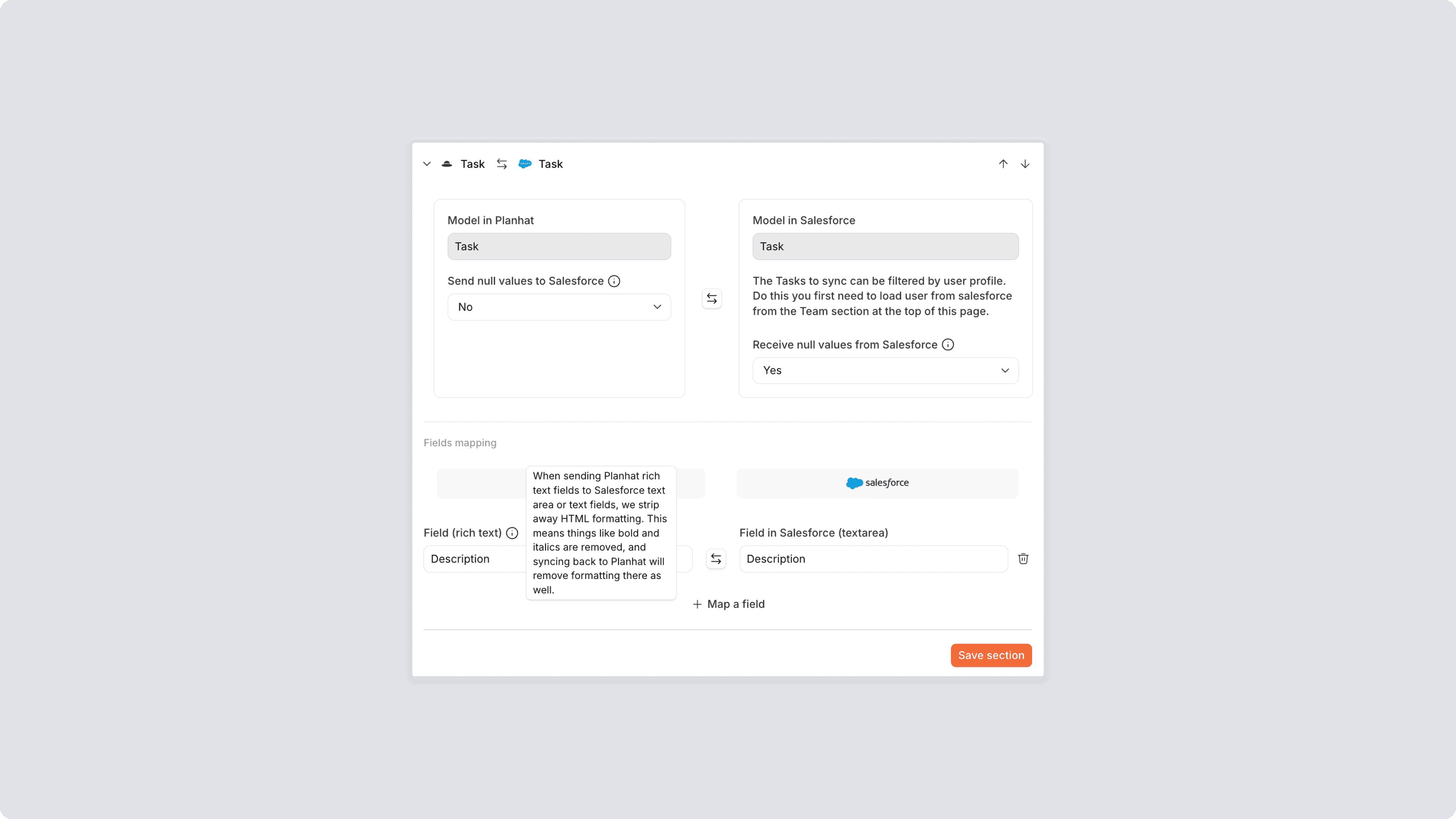
When syncing Planhat's rich-text fields to plain text or text-area fields in Salesforce, we now optimize rich-text formatting to make the data fully readable across both systems, by Humans and AI agents alike.
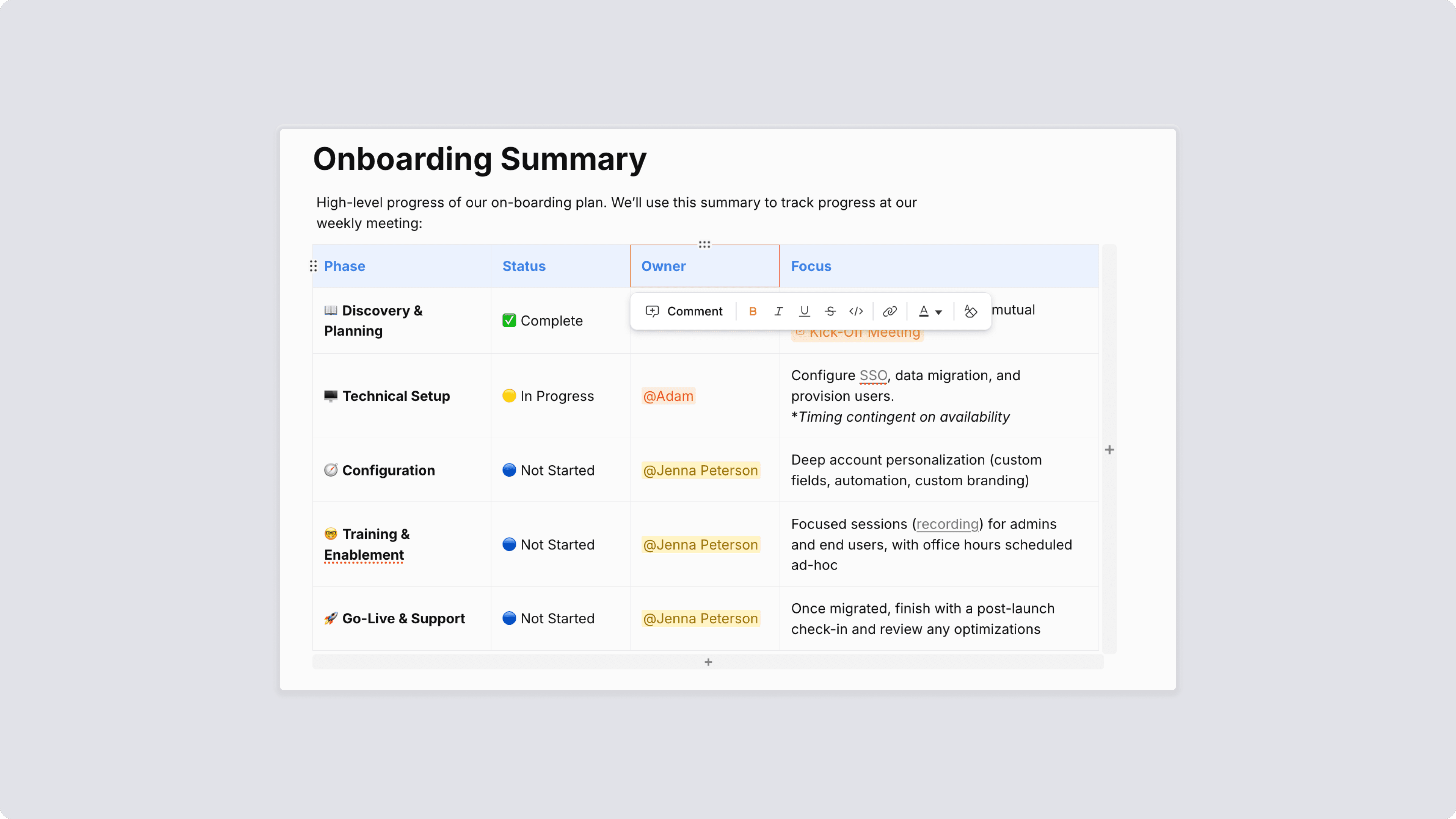
Tables in documents now feel as intuitive as working in a spreadsheet—whether you’re building account plans, team summaries, or shared project roadmaps. You can now format text directly within cells (bold, italic, links, and more).
Improvements
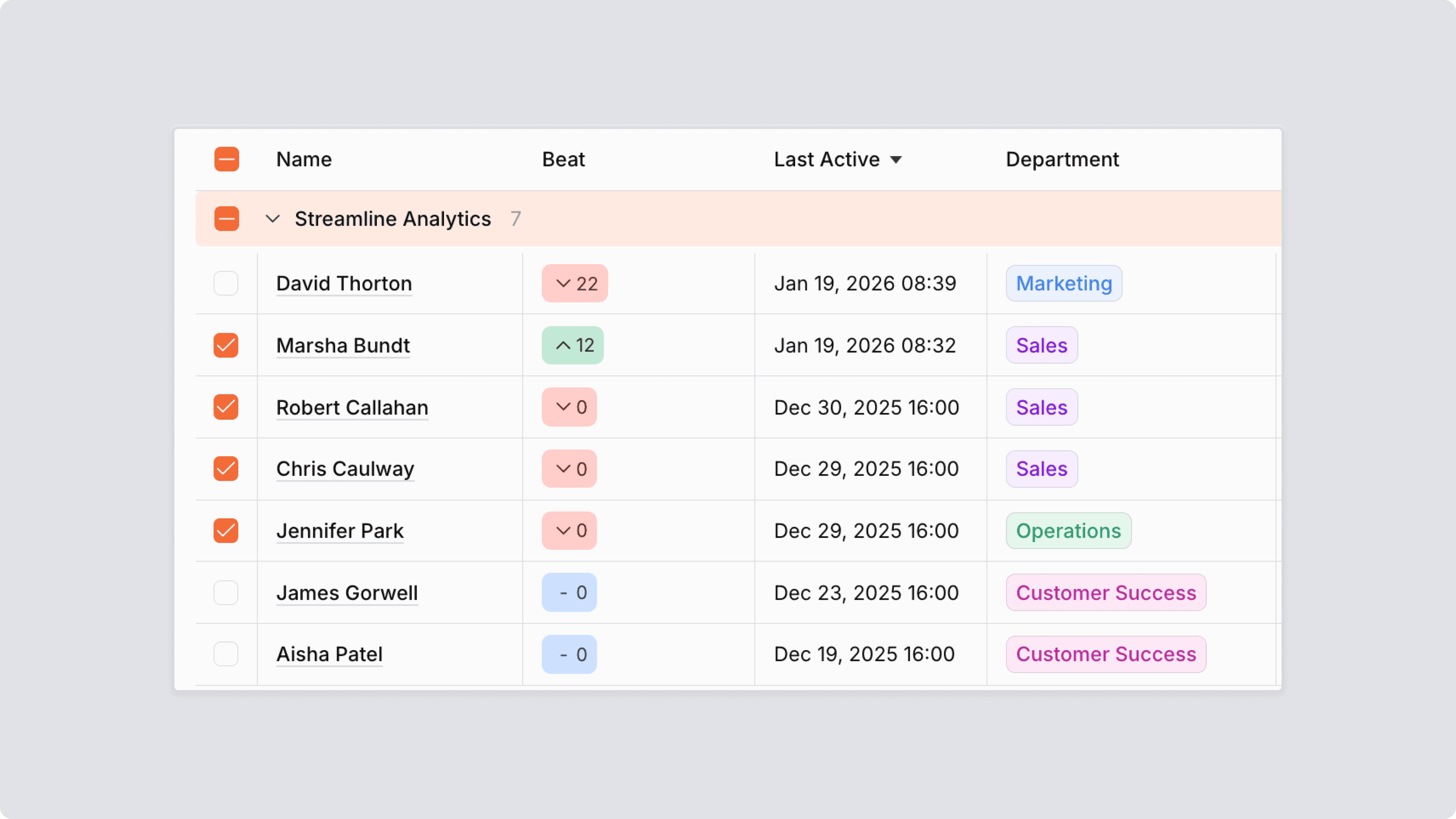
Work faster with precise row selection in your data views. Use Shift + Click to select ranges quickly — perfect for updating filtered lists, managing large datasets, or making quick bulk changes without tedious clicking.
Improvements
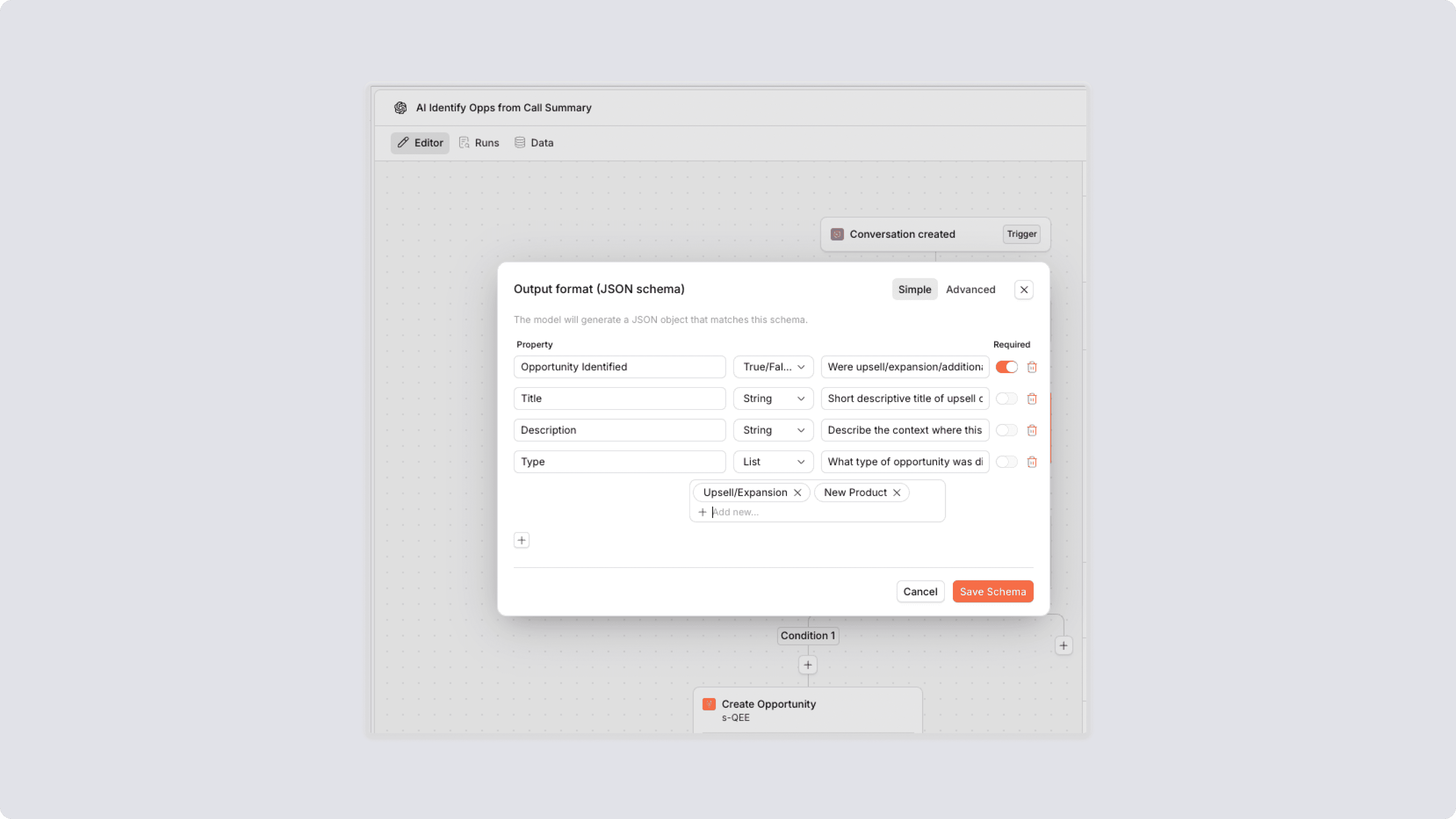
Structured Output from AI Steps
No more messy, unstructured data back from your LLMs. This feature lets you control exactly what Planhat’s AI step outputs — in a structured format (JSON). Define fields, the expected data type for each, and whether they’re required to ensure consistent results every time.
Add field descriptions to guide the AI with clear context for what each field should contain — helping it generate more accurate and reliable output. The resulting JSON can be used for branching logic, or to create and update data directly. Support for using your existing field configurations from Planhat is coming soon — so you won’t need to define them manually.
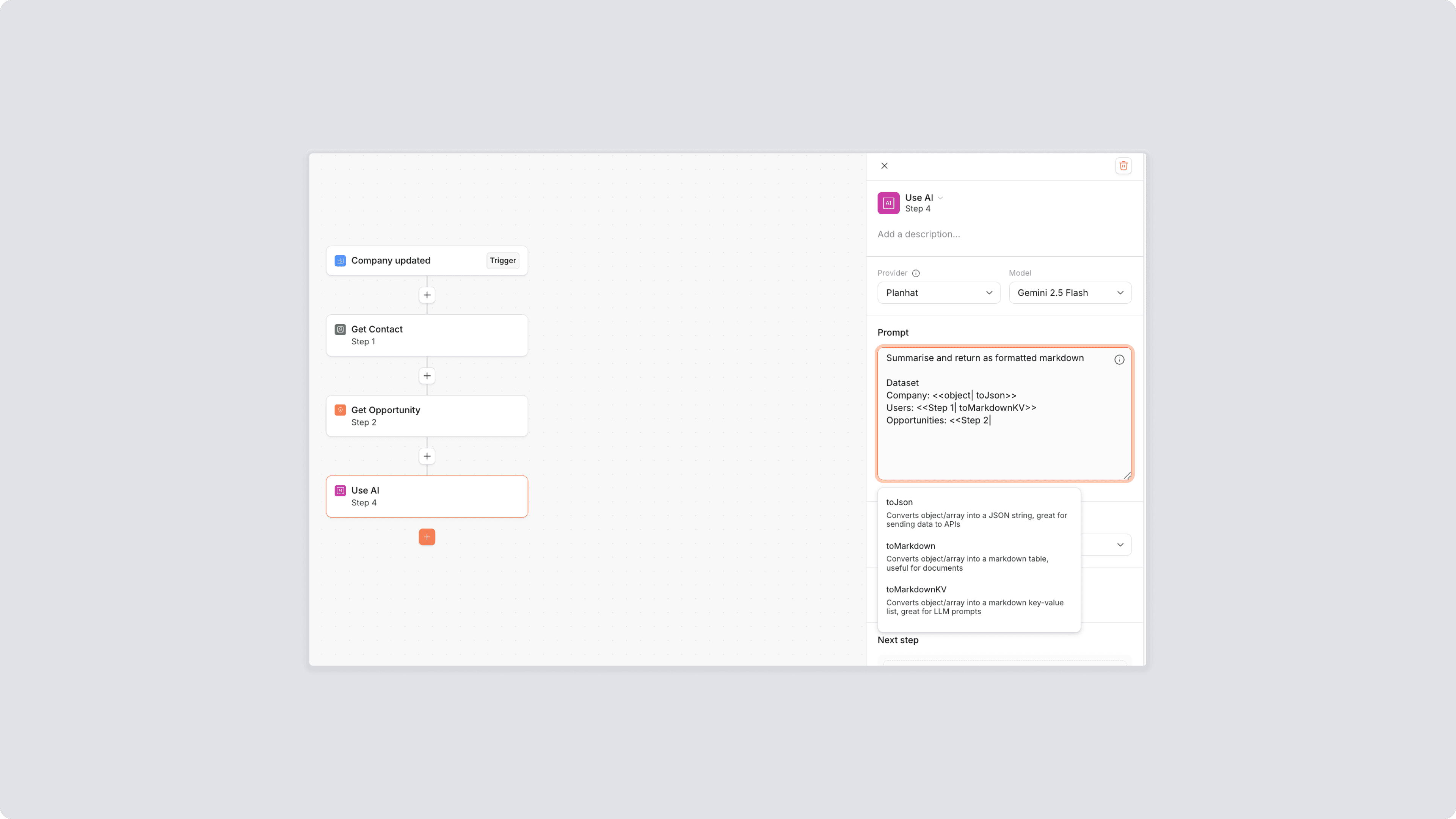
Accurate AI with Markdown KV Formatter
When sending CRM-style input to an LLM — like account details, end-user information, or conversation metadata — formatting it as Markdown KV pairs leads to better results. It reduces hallucinations and improves accuracy by giving each data point a clear label for context. This formatter is now available in Automations to help structure your prompts more effectively.
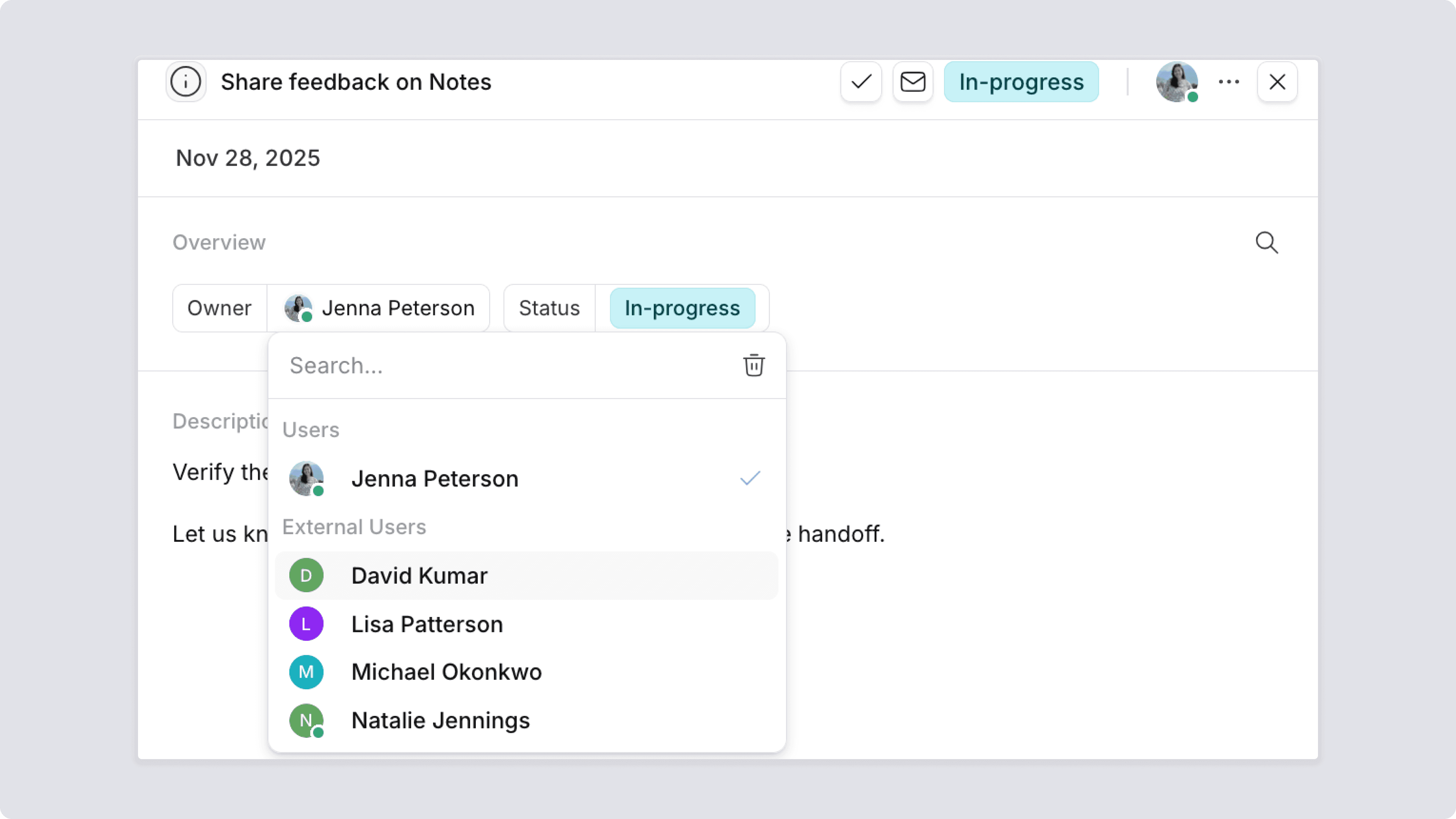
Assign External Users to Tasks and Notes in Portals
External users can now be assigned as Task owners in Portals, enabling shared accountability in project planning and onboarding workflows.
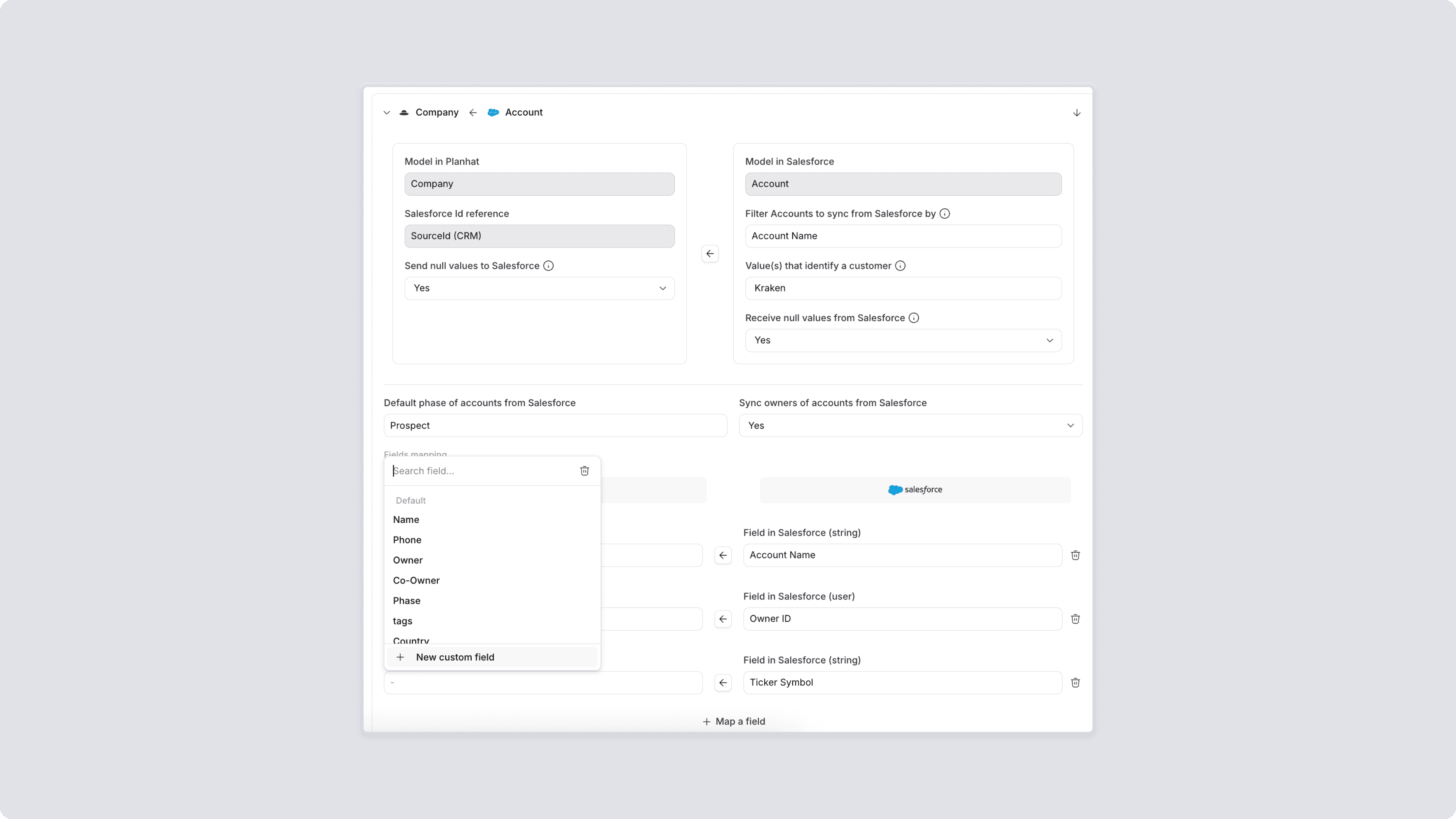
Add new Fields from apps and Integrations
The ability to add new fields directly from field pickers has been extended to apps, app-templates, and integrations. Whether you are integrating with a new source, or building an automation to enrich your records, you can create and map your fields in the same motion.
Dynamic Dates in Formula Fields + Performance Improvement
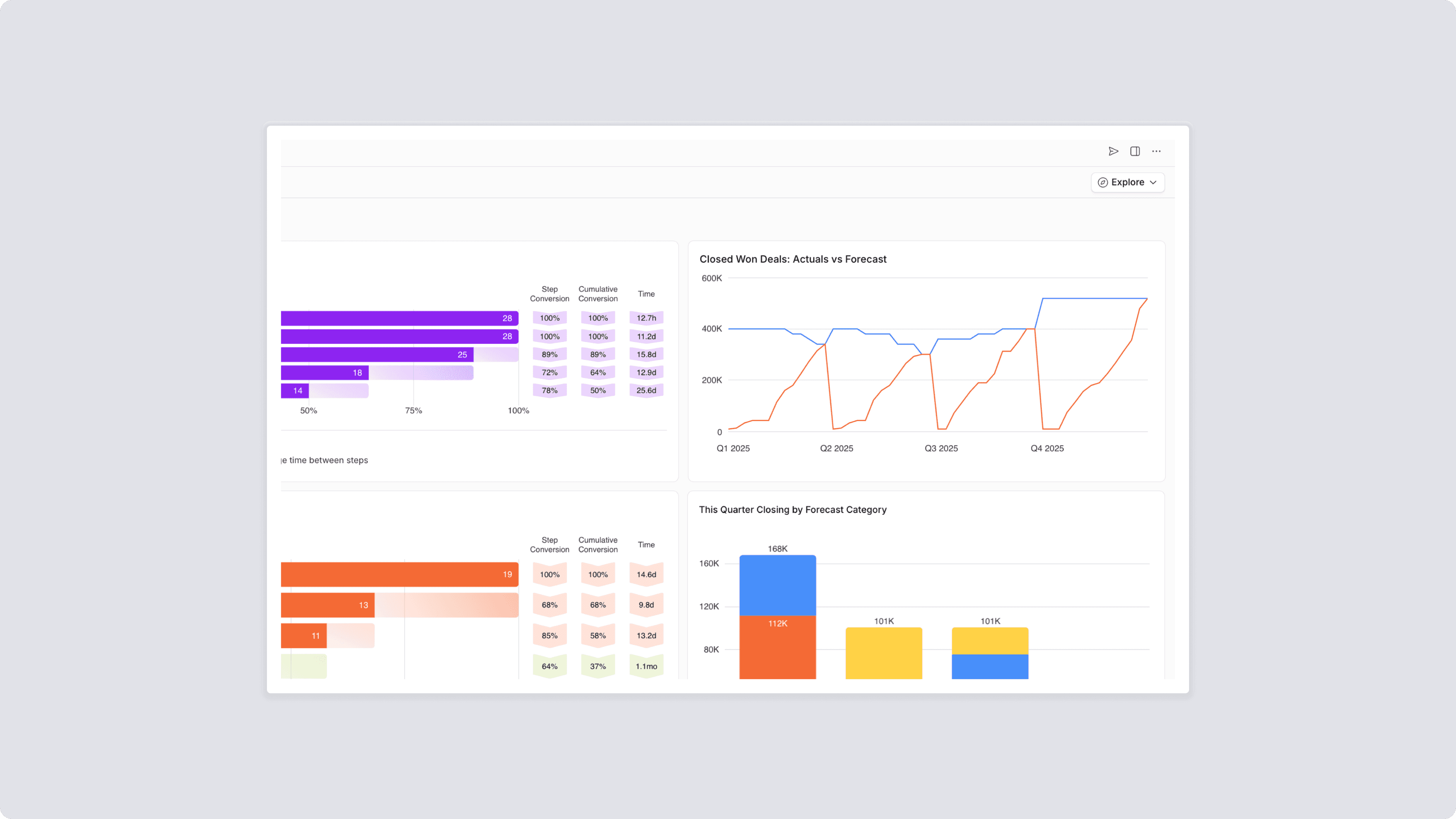
You can now use formula fields to calculate differences between dates, expressed in days, weeks, months, quarters, years (including fiscal periods). This works for both same and cross-model calculations.
With this, you can attribute events and milestones to defined time periods, like counting the number of tickets from a customer so far this year. You can also track targets, like summing up opportunities closing this quarter, using calculated metrics to track how a rep’s target attainment develops over time.
You can read more here.
Upgrades to User Management
Planhat has made various upgrades to user management in the application.
You will now see a concept of User Types in Planhat; Core, Productivity and View, as well as Service Seats for customers with Service Delivery available in your plan.
User Type and Seat are set on Role and User to control eligibility of Roles for Users. The number of available Core Users, Productivity Users, View Users, and Service Seats are governed by your plan.
You can read more here.
Customise Automation Templates
On most Automation Templates, you can now press "Customise" to open the raw automation editor.
Great to customise general templates after your specific case (eg, prompt), or to build the flow out based on a core automation sequence.
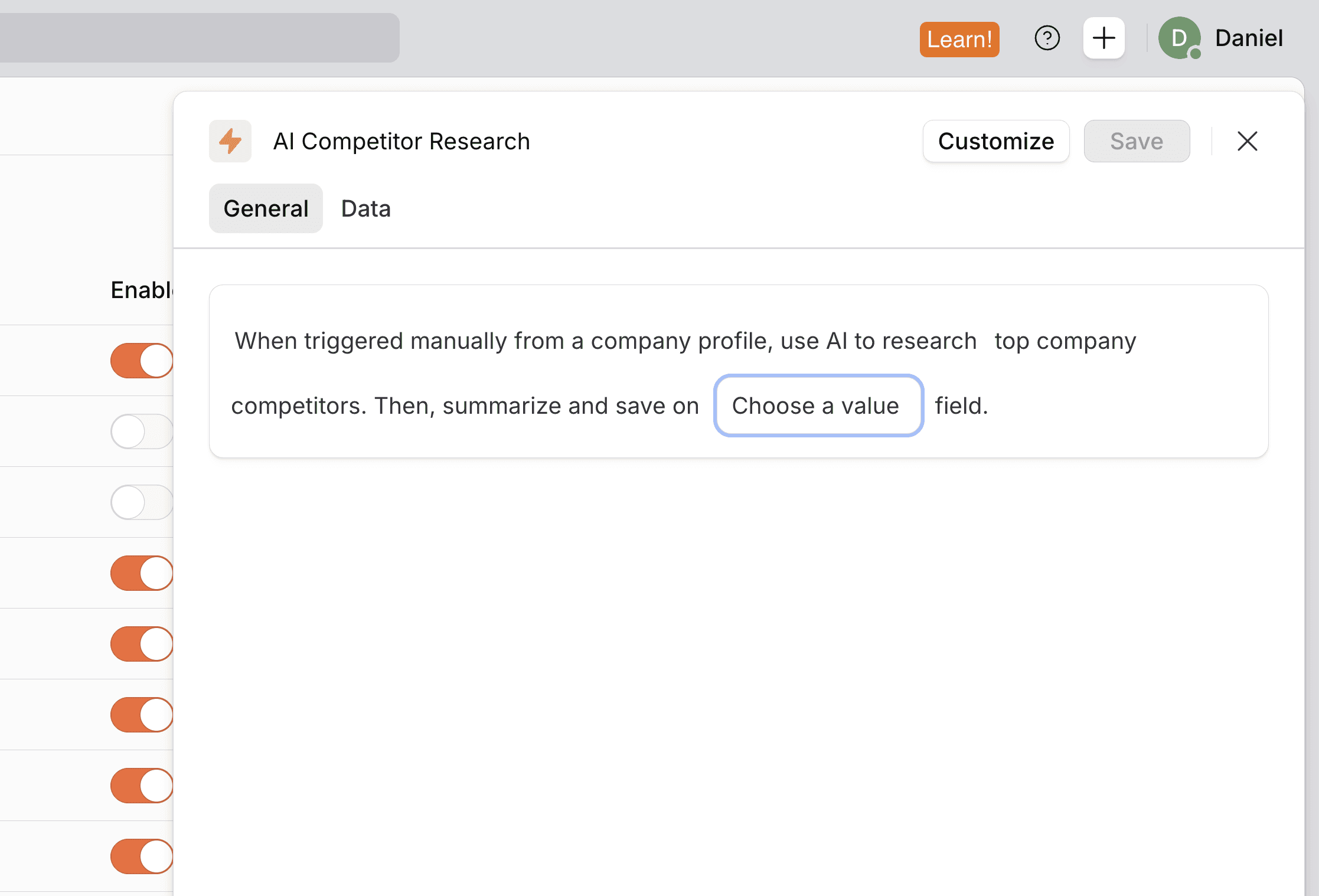
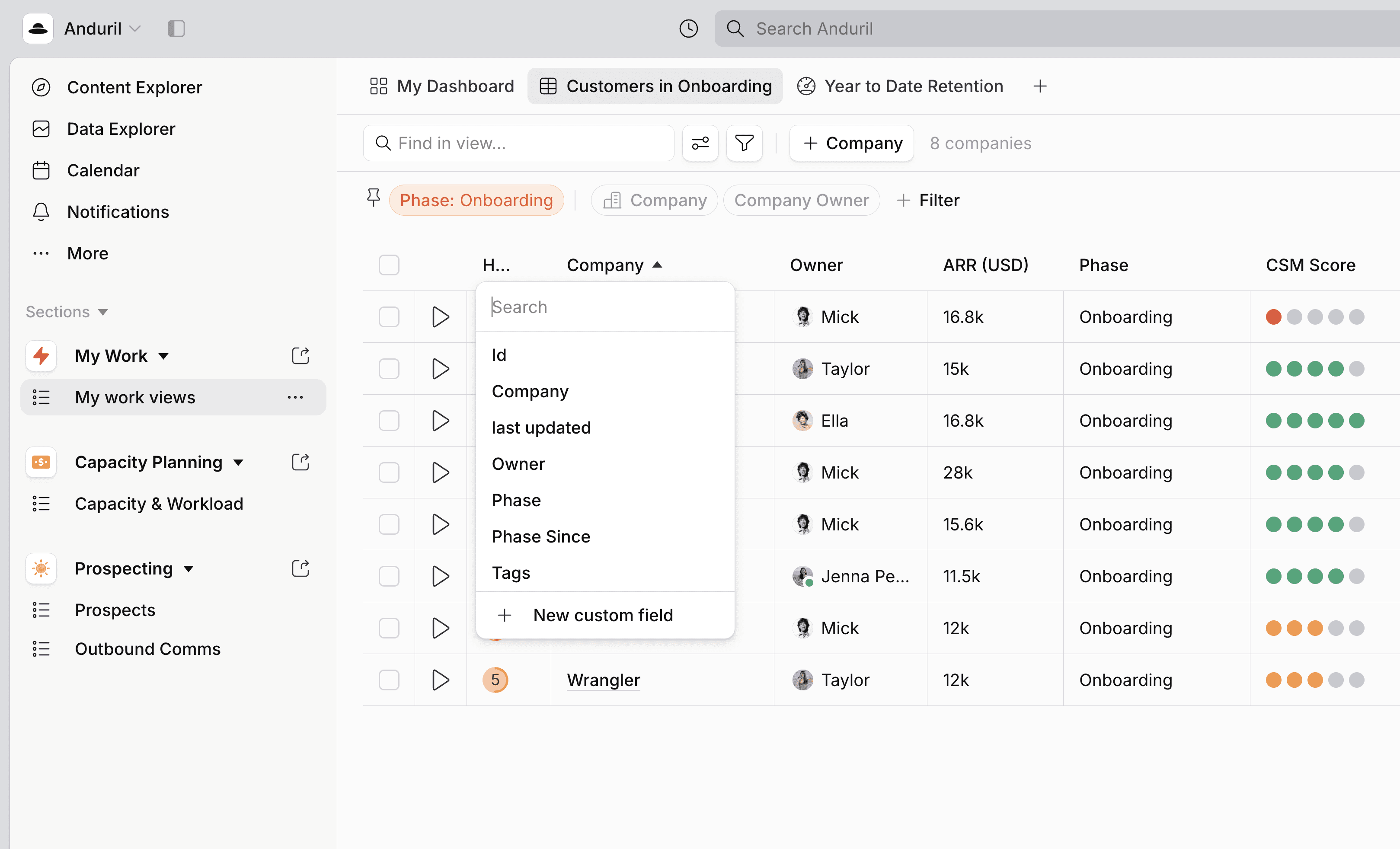
Create custom fields from field pickers
Now you can update/manage your data model "from the edge".
This creates a more natural flow when you want to add a column, create an automated flow, or integrate - and can directly adapt your data model. Small but useful improvement. Over next week, adding this across all field pickers.