Portals
Portals
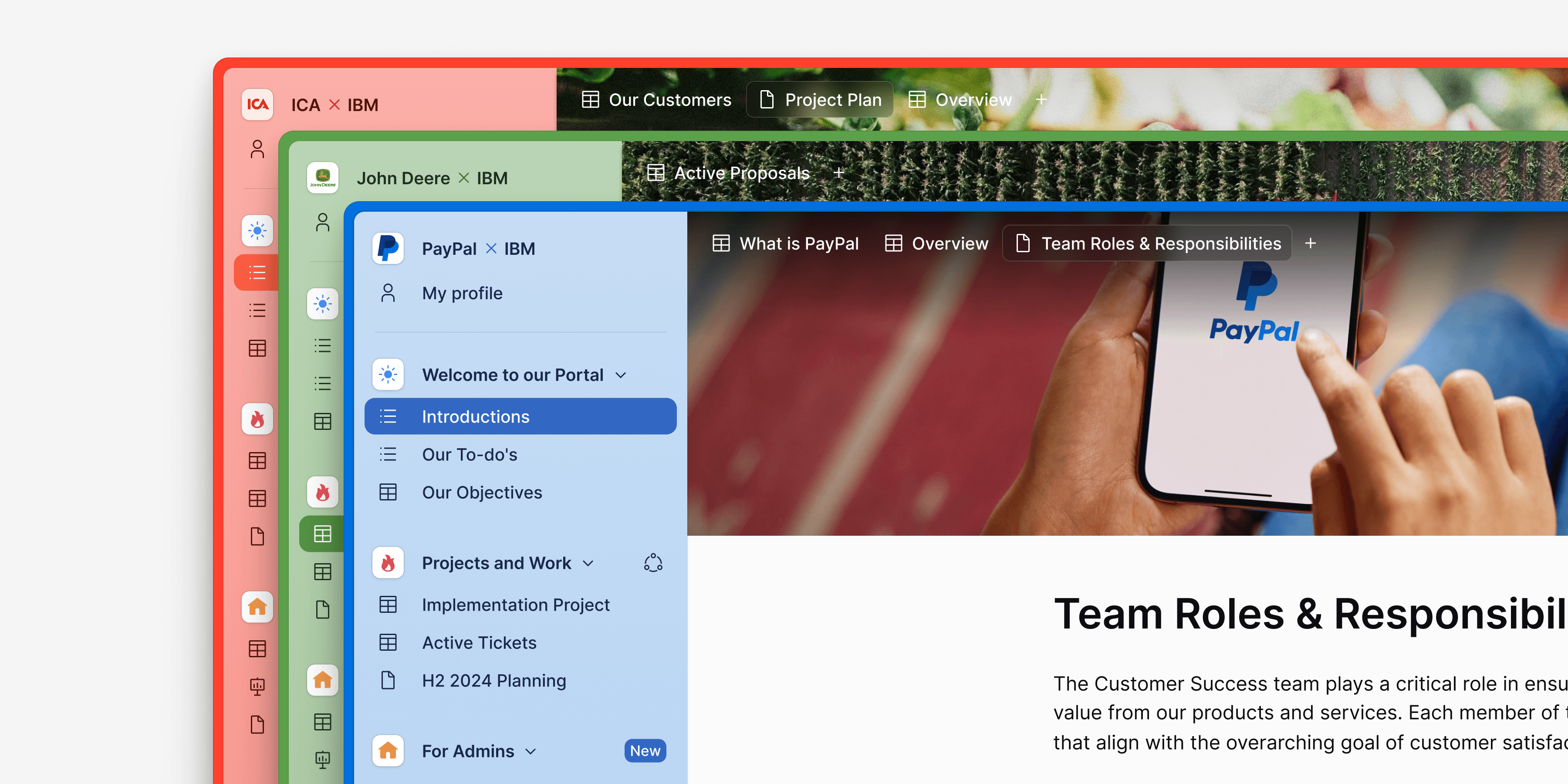
Customer collaboration typically happens across scattered emails, calendar invites, and document links, creating misalignment, friction, and a poor customer experience. Planhat's Portals curate a shared, branded space where all relevant data, workflows, and collaboration stream live between your internal app and your customers. It's a one-stop-shop where customers can see real-time updates, take action on their own, and work alongside your team—all while you maintain granular control over access and build custom experiences at scale.
01
Deal Room
Collaborate on close plans, share interactive content and securely exchange files - dynamically tailored to each prospect's needs
02
Onboarding and Enablement
Run surveys, assign project tasks, and collaborate on planning documents—all within a secure environment with granular access controls for specific contacts
03
Scaled Customer Success
Deploy Content Templates to deliver consistent, best-practice customer experiences automatically as you grow your customer base
Power your every process.


What do Planhat Portals give customers that a shared slide deck or email update can't?
Planhat Portals give customers a live, shared environment rather than a static snapshot. Instead of fragmented email threads, Portals provide a single home for onboarding plans, success milestones, and health data that both sides can access at any time. This transforms the relationship from a vendor-buyer dynamic into an operational partnership built on a shared, current view of the customer journey.
How do Portals make the customer an active participant in their own success?
The customer lifecycle is often invisible to the customer themselves. Portals change this by providing operational transparency — during onboarding, customers track live milestones; at renewal, they see accumulated value rather than just a bill. This visibility ensures customers are active participants in their own success, driving higher engagement and a clearer path to retention.
How do Portals reduce the time commercial teams spend preparing and delivering updates?
Most commercial teams spend hours building static QBR decks that are outdated by the time they are presented. Portals eliminate this reporting friction by replacing static PDFs with a live collaborative interface — self-service intelligence allows customers to find answers to 'How are we doing?' in real time, removing the administrative burden on teams.
How do Portals ensure customers are always seeing accurate, live data?
Planhat Portals operate on the Unified Data Model, ensuring live data alignment. Because the data is live and time-aware, a customer sees a product usage spike or a milestone completion the moment it happens. This transparency builds trust — the customer knows they are seeing the current reality, not a curated snapshot prepared days in advance.
How does Planhat control what customers can and can't see within a Portal?
Planhat Portals are built with enterprise-grade governance that gives organisations total control over what is shared. Through granular access control, you can decide exactly which widgets, documents, or data points are visible to which stakeholders — ensuring internal proprietary signals remain secure while providing a transparent and collaborative customer environment.