How Far can AI take Customer Success?
How Far can AI take Customer Success?

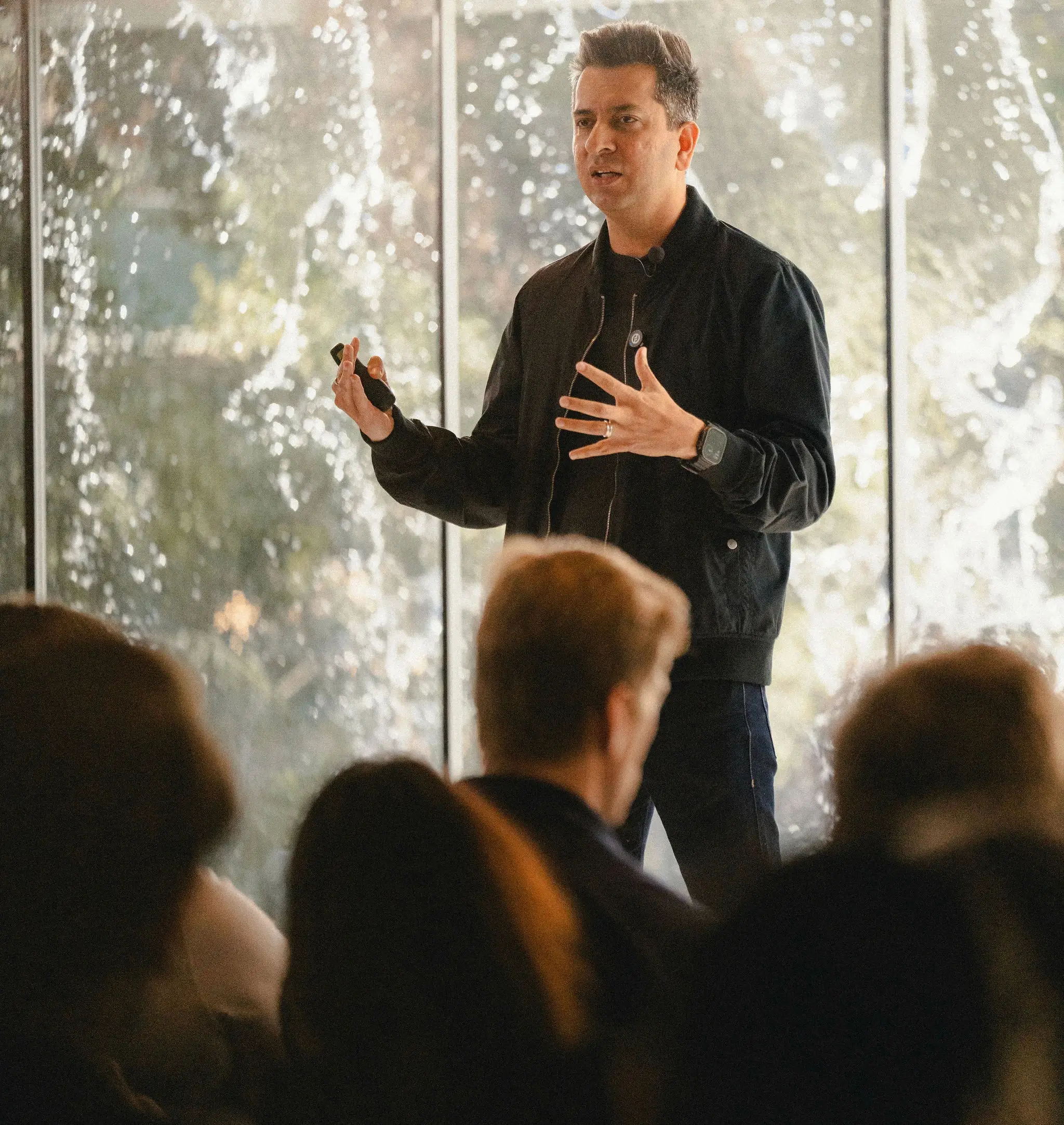
Adèle Dugré shares how Dust uses AI to improve customer experience and reinvest time in strategic work.
Share
Based on a session at FRONTIER by Planhat, on 10 November 2026.
Customer success has always been an impossible job. There’s no natural limit to how much value a CSM can create for an account, how deeply they can understand a customer’s business or how many opportunities they can uncover. The work is inherently proactive, but the time available to perform it is finite.
AI changes how much of that opportunity customer success teams can realistically pursue. By reducing the effort required to understand customer context, identify priorities and execute repeatable tasks, it creates capacity for deeper engagement. But realizing that potential requires leaders to redesign how work happens, rather than simply using automation to increase the number of accounts each CSM manages.
The goal is to make more of customer success happen reliably, so people can concentrate on the work where their judgment creates the greatest value.”
“
Based on a session at FRONTIER by Planhat, on 10 November 2026.
Customer success has always been an impossible job. There’s no natural limit to how much value a CSM can create for an account, how deeply they can understand a customer’s business or how many opportunities they can uncover. The work is inherently proactive, but the time available to perform it is finite.
AI changes how much of that opportunity customer success teams can realistically pursue. By reducing the effort required to understand customer context, identify priorities and execute repeatable tasks, it creates capacity for deeper engagement. But realizing that potential requires leaders to redesign how work happens, rather than simply using automation to increase the number of accounts each CSM manages.
“The goal is to make more of customer success happen reliably, so people can concentrate on the work where their judgment creates the greatest value.”
AI is particularly well suited to customer success
Much of customer success involves combining information from different sources, interpreting what it means and deciding what action to take. The underlying activities are repeatable, even though the appropriate response depends on each customer’s circumstances.
When product usage drops, a CSM traditionally investigates the account and previous conversations before deciding whether to contact the customer. AI can retrieve that context, connect it to other signals and suggest possible explanations automatically.
That gives the CSM a more informed starting point for deciding what to do. AI can also help challenge assumptions, investigate alternative explanations and prepare follow-up actions. The human remains responsible for the final decision, but no longer needs to perform every step required to reach it.
At Dust, this has changed how the customer experience organization approaches its work. The initial focus was on helping individual CSMs complete tasks faster. The broader opportunity became apparent as the team began connecting AI to workflows across sales, product, support and customer success.
If that knowledge isn't written down or recorded, AI cannot reliably incorporate it into future work.”
“
AI is particularly well suited to customer success
Much of customer success involves combining information from different sources, interpreting what it means and deciding what action to take. The underlying activities are repeatable, even though the appropriate response depends on each customer’s circumstances.
When product usage drops, a CSM traditionally investigates the account and previous conversations before deciding whether to contact the customer. AI can retrieve that context, connect it to other signals and suggest possible explanations automatically.
That gives the CSM a more informed starting point for deciding what to do. AI can also help challenge assumptions, investigate alternative explanations and prepare follow-up actions. The human remains responsible for the final decision, but no longer needs to perform every step required to reach it.
At Dust, this has changed how the customer experience organization approaches its work. The initial focus was on helping individual CSMs complete tasks faster. The broader opportunity became apparent as the team began connecting AI to workflows across sales, product, support and customer success.
“If that knowledge isn't written down or recorded, AI cannot reliably incorporate it into future work.”
Redesign the organization around customer needs
AI can change how work is divided between departments, particularly where existing functions spend substantial time transferring information between one another.
Dust has operated without a dedicated product management team, distributing aspects of the function between go-to-market and engineering. CSMs investigate customer needs, while AI extracts feedback, connects conversations and translates findings for engineering.
Engineering prioritizes and develops the product. Dust expects to add dedicated product management capabilities as it grows, particularly for longer-term strategy and impact evaluation.
This also changes what Dust expects from its CSMs. Rather than hiring primarily for relationship management, the company looks for product experts who can explain its capabilities, understand complex use cases and act as trusted advisors. Commercial skills are equally important because Dust’s credit-based model creates opportunities for expansion as customers deploy more use cases and increase consumption.
The gains extend beyond time saved
Some of the benefits from AI are straightforward to measure. At Dust, the time required to prepare for a routine customer check-in has fallen from approximately 20 minutes to five. For a CSM attending four meetings a day, that’s an hour recovered each day, or around 20 hours a month.
AI also allows smaller customers to receive more substantial business reviews. With less time spent gathering data and preparing presentations, CSMs can focus on interpretation and the conversations that help customers progress.
These improvements have contributed to CSMs managing 80% more ARR per book of business, without a reported decline in retention or customer experience.
Invest the capacity in better customer experiences
Greater capacity creates a decision for customer success leaders. They can use the time saved to assign more accounts to each CSM, or they can invest it in activities that improve the quality and reach of the customer experience.
Dust has chosen to emphasize the second opportunity. Its CSMs dedicate approximately 20–30% of their time to building initiatives that improve how the organization operates. That includes developing workflows, experimenting with AI and contributing to projects beyond their immediate account responsibilities.
Leaders need to make room for experimentation, recognize useful contributions and share successful workflows. Asking CSMs to experiment only after completing their regular responsibilities is unlikely to work in a job where there’s always more to do.
Move from individual experimentation to shared capabilities
At Dust, early AI adoption created a proliferation of agents built by individual employees. People developed useful workflows for meeting preparation, follow-ups and other recurring tasks, but several employees independently created agents that performed essentially the same work.
Dust describes the move toward shared capabilities as multiplayer AI: employees building on one another’s work rather than repeatedly starting from scratch.
For established businesses beginning their own AI adoption, the first step is to identify a concrete, low-risk use case where the benefit becomes visible quickly. Meeting preparation is particularly suitable because employees can compare the results with their existing process and establish confidence in the technology.
Leaders can then introduce shared ownership, consistent practices and a way to extend successful workflows across the organization.
Better AI requires a better record of how the business works
Reliable AI also depends on the information available to it. An agent working from incomplete CRM records will struggle to form an accurate understanding of a customer, regardless of how sophisticated the underlying model becomes.
That doesn’t mean companies should wait until their data is perfect before introducing AI. Connecting additional sources can help recover information missing from existing systems, while automation can contribute to improving the quality of those records.
Organizations need to capture customer conversations, internal meetings and important decisions consistently. If that knowledge isn’t written down or recorded, AI cannot reliably incorporate it into future work.
Dust advocates developing a stronger written and recorded culture so that agents can access the knowledge employees generate through their everyday activities. This gives the organization a more complete foundation for automation and reduces dependence on what individual employees happen to remember.
As that foundation improves, more workflows can operate autonomously. The level of human oversight should depend on the customer, the process and the consequences of a mistake. Routine activities can increasingly be delegated, while complex or commercially sensitive decisions continue to require human judgment.
Build for a more capable customer success organization
The goal is to make more of customer success happen reliably, so people can concentrate on the work where their judgment creates the greatest value.
The Archive
[
Discover All
]
[
Through the Lens
]
[
Talking Planhat
]
[
Expert Advice
]
[
In Perspective
]
[
In Conversation
]




Load more
The Archive
[
Discover All
]
[
Through the Lens
]
[
Talking Planhat
]
[
Expert Advice
]
[
In Perspective
]
[
In Conversation
]
Load more
The Archive
[
Discover All
]
[
Through the Lens
]
[
Talking Planhat
]
[
Expert Advice
]
[
In Perspective
]
[
In Conversation
]
Load more

Don't miss a beat.
Don't miss a beat.