Outcomes Are the New Contract
Outcomes Are the New Contract
In an outcome-based economy, customers aren’t paying for promises—they’re paying for proof of real business value. Why value is something you demonstrate, not something you claim.
Share
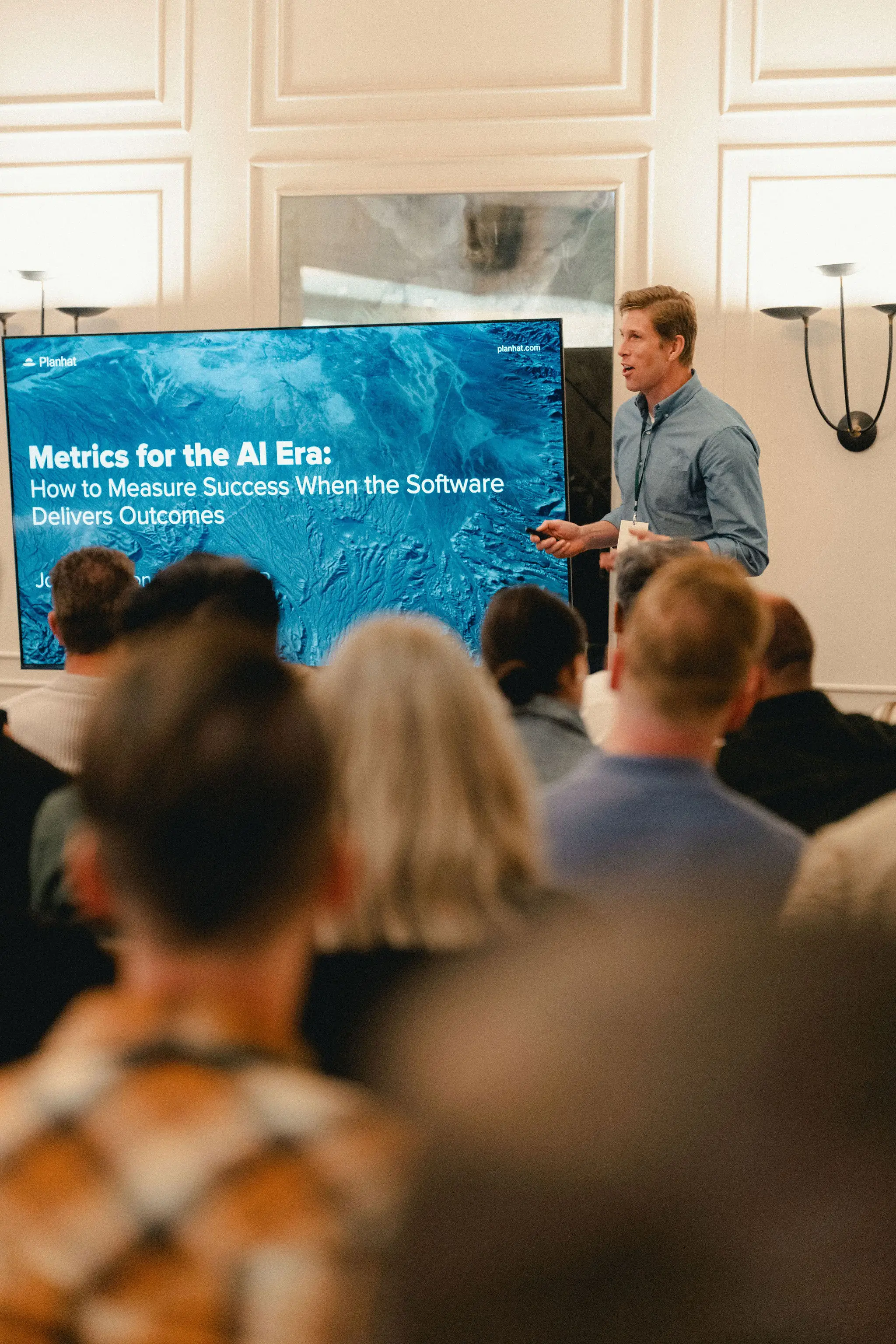
This article is repurposed from a conversation on our webinar, Proving Value in an Outcome-Based Economy.
—
For years, “Customer Success” could get away with speaking in aspirations: adoption, enablement, best practices, transformation. The customer might nod, sign, and hope the value showed up later.
That era is over.
In an outcome-based economy, customers aren’t paying for promises. They’re paying for proof of real business value. Not because they’re cynical but because they’re accountable. Buying decisions are shared, budgets are scrutinized, and every tool is competing with a simple question: What impact will it have, and how soon will we see it? Our job, in sales and customer success, is to help identify the hurdles of getting there and then orchestrate the path.
The shift is subtle but profound: value isn’t something you claim. Value is something you demonstrate.
Big Outcomes Don’t Win. Real Outcomes Do.
Outcomes have become a loaded word, mostly because many teams hear “outcomes” and think “massive transformation.” That assumption turns the whole conversation into theater like showcasing lofty future-states, visionary roadmaps, and a too-good-to-be-true ROI.
A more useful and trustworthy is incremental as it proves something tangible early.
A one percent improvement in two weeks beats a forty percent promise in twelve months. Not because one percent is the goal, but because it’s believable. It creates momentum. It turns a vendor into a partner with evidence, not opinions. The key is creating a path of attainable base camps while keeping the summit as your guide.
That’s the new standard. Outcomes don’t need to be grand. They need to be provable, repeatable, and tied to what the customer is trying to get done right now.
This article is repurposed from a conversation on our webinar, Proving Value in an Outcome-Based Economy.
—
For years, “Customer Success” could get away with speaking in aspirations: adoption, enablement, best practices, transformation. The customer might nod, sign, and hope the value showed up later.
That era is over.
In an outcome-based economy, customers aren’t paying for promises. They’re paying for proof of real business value. Not because they’re cynical but because they’re accountable. Buying decisions are shared, budgets are scrutinized, and every tool is competing with a simple question: What impact will it have, and how soon will we see it? Our job, in sales and customer success, is to help identify the hurdles of getting there and then orchestrate the path.
The shift is subtle but profound: value isn’t something you claim. Value is something you demonstrate.
Big Outcomes Don’t Win. Real Outcomes Do.
Outcomes have become a loaded word, mostly because many teams hear “outcomes” and think “massive transformation.” That assumption turns the whole conversation into theater like showcasing lofty future-states, visionary roadmaps, and a too-good-to-be-true ROI.
A more useful and trustworthy is incremental as it proves something tangible early.
A one percent improvement in two weeks beats a forty percent promise in twelve months. Not because one percent is the goal, but because it’s believable. It creates momentum. It turns a vendor into a partner with evidence, not opinions. The key is creating a path of attainable base camps while keeping the summit as your guide.
That’s the new standard. Outcomes don’t need to be grand. They need to be provable, repeatable, and tied to what the customer is trying to get done right now.
This article is repurposed from a conversation on our webinar, Proving Value in an Outcome-Based Economy.
—
For years, “Customer Success” could get away with speaking in aspirations: adoption, enablement, best practices, transformation. The customer might nod, sign, and hope the value showed up later.
That era is over.
In an outcome-based economy, customers aren’t paying for promises. They’re paying for proof of real business value. Not because they’re cynical but because they’re accountable. Buying decisions are shared, budgets are scrutinized, and every tool is competing with a simple question: What impact will it have, and how soon will we see it? Our job, in sales and customer success, is to help identify the hurdles of getting there and then orchestrate the path.
The shift is subtle but profound: value isn’t something you claim. Value is something you demonstrate.
Big Outcomes Don’t Win. Real Outcomes Do.
Outcomes have become a loaded word, mostly because many teams hear “outcomes” and think “massive transformation.” That assumption turns the whole conversation into theater like showcasing lofty future-states, visionary roadmaps, and a too-good-to-be-true ROI.
A more useful and trustworthy is incremental as it proves something tangible early.
A one percent improvement in two weeks beats a forty percent promise in twelve months. Not because one percent is the goal, but because it’s believable. It creates momentum. It turns a vendor into a partner with evidence, not opinions. The key is creating a path of attainable base camps while keeping the summit as your guide.
That’s the new standard. Outcomes don’t need to be grand. They need to be provable, repeatable, and tied to what the customer is trying to get done right now.
Your Lifecycle Language Isn’t Your Customer’s Language
Many organizations still talk about customer success as if the customer is fluent in internal operating models. “Onboarding.” “Enablement.” “Implementation.” “Utilization.” These are useful words for teams. They may not be the words customers use to justify spend.
Customers translate everything into a simpler set of truths:
Onboarding isn’t a phase. It’s time to value – and it’s your first chance to win trust.
Enablement isn’t a program. It’s confidence without dependency.
Adoption isn’t a dashboard. It’s continuous proof that the decision was right.
Health isn’t a score. It’s what happens if we take it away tomorrow.
If your value story lives inside your internal terminology, you’ll struggle to create alignment across stakeholders, because every level of the customer organization hears a different story.
The goal isn’t to “dumb it down.” It’s to make it portable, meaning a message the day-to-day champion can repeat to leadership, and leadership can repeat to finance, and so on. Think of it this way, unless your economic buyer can’t easily articulate the value they’re getting of your product or services, does it matter what your NPS or Health Score says?
Your Lifecycle Language Isn’t Your Customer’s Language
Many organizations still talk about customer success as if the customer is fluent in internal operating models. “Onboarding.” “Enablement.” “Implementation.” “Utilization.” These are useful words for teams. They may not be the words customers use to justify spend.
Customers translate everything into a simpler set of truths:
Onboarding isn’t a phase. It’s time to value – and it’s your first chance to win trust.
Enablement isn’t a program. It’s confidence without dependency.
Adoption isn’t a dashboard. It’s continuous proof that the decision was right.
Health isn’t a score. It’s what happens if we take it away tomorrow.
If your value story lives inside your internal terminology, you’ll struggle to create alignment across stakeholders, because every level of the customer organization hears a different story.
The goal isn’t to “dumb it down.” It’s to make it portable, meaning a message the day-to-day champion can repeat to leadership, and leadership can repeat to finance, and so on. Think of it this way, unless your economic buyer can’t easily articulate the value they’re getting of your product or services, does it matter what your NPS or Health Score says?
Your Lifecycle Language Isn’t Your Customer’s Language
Many organizations still talk about customer success as if the customer is fluent in internal operating models. “Onboarding.” “Enablement.” “Implementation.” “Utilization.” These are useful words for teams. They may not be the words customers use to justify spend.
Customers translate everything into a simpler set of truths:
Onboarding isn’t a phase. It’s time to value – and it’s your first chance to win trust.
Enablement isn’t a program. It’s confidence without dependency.
Adoption isn’t a dashboard. It’s continuous proof that the decision was right.
Health isn’t a score. It’s what happens if we take it away tomorrow.
If your value story lives inside your internal terminology, you’ll struggle to create alignment across stakeholders, because every level of the customer organization hears a different story.
The goal isn’t to “dumb it down.” It’s to make it portable, meaning a message the day-to-day champion can repeat to leadership, and leadership can repeat to finance, and so on. Think of it this way, unless your economic buyer can’t easily articulate the value they’re getting of your product or services, does it matter what your NPS or Health Score says?
Multi-Stakeholder Buying Has Changed What “Success” Means
Customer outcomes aren’t hard because customers don’t know what they want. They’re hard because customers want different things at different altitudes.
The operator wants friction removed so they can do their job.
The executive wants risk reduced so they can protect the business.
The CFO wants costs controlled so they can defend a budget.
The business leader wants relevance so they don’t fall behind the market.
This is why generic outcome menus fail. The work isn’t picking from four outcomes on a slide. The work is mapping the same product to multiple forms of value and showing how they connect.
A practical way to do that is to split outcomes into two buckets:
Pain removal: the measurable constraint (time, cost, risk, rework, delays).
Vision enablement: what becomes possible once the constraint is removed.
Most teams try to sell the vision first. But vision is abstract until the pain is real. Pain removal earns credibility, and credibility earns permission to talk about bigger change. In my experience, use pain removal when selling to the economic buyer and sell the vision to your champion. Let the champion be the visionary hero and most importantly, let them deliver the business case to the buying team. Anything ROIs coming directly from a seller is immediately met with skepticism but when it comes from within their org, it has a chance of getting passed frowning eyebrows.
Multi-Stakeholder Buying Has Changed What “Success” Means
Customer outcomes aren’t hard because customers don’t know what they want. They’re hard because customers want different things at different altitudes.
The operator wants friction removed so they can do their job.
The executive wants risk reduced so they can protect the business.
The CFO wants costs controlled so they can defend a budget.
The business leader wants relevance so they don’t fall behind the market.
This is why generic outcome menus fail. The work isn’t picking from four outcomes on a slide. The work is mapping the same product to multiple forms of value and showing how they connect.
A practical way to do that is to split outcomes into two buckets:
Pain removal: the measurable constraint (time, cost, risk, rework, delays).
Vision enablement: what becomes possible once the constraint is removed.
Most teams try to sell the vision first. But vision is abstract until the pain is real. Pain removal earns credibility, and credibility earns permission to talk about bigger change. In my experience, use pain removal when selling to the economic buyer and sell the vision to your champion. Let the champion be the visionary hero and most importantly, let them deliver the business case to the buying team. Anything ROIs coming directly from a seller is immediately met with skepticism but when it comes from within their org, it has a chance of getting passed frowning eyebrows.
Multi-Stakeholder Buying Has Changed What “Success” Means
Customer outcomes aren’t hard because customers don’t know what they want. They’re hard because customers want different things at different altitudes.
The operator wants friction removed so they can do their job.
The executive wants risk reduced so they can protect the business.
The CFO wants costs controlled so they can defend a budget.
The business leader wants relevance so they don’t fall behind the market.
This is why generic outcome menus fail. The work isn’t picking from four outcomes on a slide. The work is mapping the same product to multiple forms of value and showing how they connect.
A practical way to do that is to split outcomes into two buckets:
Pain removal: the measurable constraint (time, cost, risk, rework, delays).
Vision enablement: what becomes possible once the constraint is removed.
Most teams try to sell the vision first. But vision is abstract until the pain is real. Pain removal earns credibility, and credibility earns permission to talk about bigger change. In my experience, use pain removal when selling to the economic buyer and sell the vision to your champion. Let the champion be the visionary hero and most importantly, let them deliver the business case to the buying team. Anything ROIs coming directly from a seller is immediately met with skepticism but when it comes from within their org, it has a chance of getting passed frowning eyebrows.
The “Rip It Out” Test
There’s a blunt way to check whether you’ve defined value or if it’s just activity:
If the customer removed your product tomorrow, would they feel a business impact, or would they mostly feel inconvenience? This is such a strong way to think - not only for retention of software and services but for processes and employees.
When the answer is “impact,” you have an outcome.
When the answer is “inconvenience,” you have usage but not value.
And usage without value is a churn story waiting to happen.
To add some color to that, go through the list of people on your team and ask yourself two simple questions for each;
What if you had 10 of them?
What if they quit tomorrow?
Whatever your gut immediately tells you is usually the right answer and now your job is to communicate this feedback to each team member and take appropriate action. If you’re stuck in between and unsure, then you’ve become hostage to a situation you need to get out of. For your sake and for theirs.
This test also fixes a common trap: measuring what’s easy to measure instead of what matters. Dashboards can show plenty of movement while the customer quietly questions the spend.
The “Rip It Out” Test
There’s a blunt way to check whether you’ve defined value or if it’s just activity:
If the customer removed your product tomorrow, would they feel a business impact, or would they mostly feel inconvenience? This is such a strong way to think - not only for retention of software and services but for processes and employees.
When the answer is “impact,” you have an outcome.
When the answer is “inconvenience,” you have usage but not value.
And usage without value is a churn story waiting to happen.
To add some color to that, go through the list of people on your team and ask yourself two simple questions for each;
What if you had 10 of them?
What if they quit tomorrow?
Whatever your gut immediately tells you is usually the right answer and now your job is to communicate this feedback to each team member and take appropriate action. If you’re stuck in between and unsure, then you’ve become hostage to a situation you need to get out of. For your sake and for theirs.
This test also fixes a common trap: measuring what’s easy to measure instead of what matters. Dashboards can show plenty of movement while the customer quietly questions the spend.
The “Rip It Out” Test
There’s a blunt way to check whether you’ve defined value or if it’s just activity:
If the customer removed your product tomorrow, would they feel a business impact, or would they mostly feel inconvenience? This is such a strong way to think - not only for retention of software and services but for processes and employees.
When the answer is “impact,” you have an outcome.
When the answer is “inconvenience,” you have usage but not value.
And usage without value is a churn story waiting to happen.
To add some color to that, go through the list of people on your team and ask yourself two simple questions for each;
What if you had 10 of them?
What if they quit tomorrow?
Whatever your gut immediately tells you is usually the right answer and now your job is to communicate this feedback to each team member and take appropriate action. If you’re stuck in between and unsure, then you’ve become hostage to a situation you need to get out of. For your sake and for theirs.
This test also fixes a common trap: measuring what’s easy to measure instead of what matters. Dashboards can show plenty of movement while the customer quietly questions the spend.
Beware the Watermelon: Green Outside, Red Inside
Many accounts look healthy because the signals look good: logins, feature usage, training attendance, a clean renewal forecast.
Then the renewal goes sideways and everyone asks how it happened.
It happened because activity isn’t success. Success is before vs. after. A story the customer can tell in plain language:
“We were here. Now we’re here. This is what changed.”
If your team can’t articulate that story for a “healthy” account, you don’t have health, you have surface area. The customer may be “green” on paper while being “red” in reality.
The fastest way to expose this is not another score. It’s a better question:
“How do you define success — and are you seeing it?”
Beware the Watermelon: Green Outside, Red Inside
Many accounts look healthy because the signals look good: logins, feature usage, training attendance, a clean renewal forecast.
Then the renewal goes sideways and everyone asks how it happened.
It happened because activity isn’t success. Success is before vs. after. A story the customer can tell in plain language:
“We were here. Now we’re here. This is what changed.”
If your team can’t articulate that story for a “healthy” account, you don’t have health, you have surface area. The customer may be “green” on paper while being “red” in reality.
The fastest way to expose this is not another score. It’s a better question:
“How do you define success — and are you seeing it?”
Beware the Watermelon: Green Outside, Red Inside
Many accounts look healthy because the signals look good: logins, feature usage, training attendance, a clean renewal forecast.
Then the renewal goes sideways and everyone asks how it happened.
It happened because activity isn’t success. Success is before vs. after. A story the customer can tell in plain language:
“We were here. Now we’re here. This is what changed.”
If your team can’t articulate that story for a “healthy” account, you don’t have health, you have surface area. The customer may be “green” on paper while being “red” in reality.
The fastest way to expose this is not another score. It’s a better question:
“How do you define success — and are you seeing it?”
AI Isn’t the Strategy. It’s the Pressure Test.
AI is accelerating the outcome shift for one reason: it raises expectations while compressing patience.
Customers want faster progress, fewer manual steps, and smarter guidance. They also want to feel like they’re still dealing with humans who care when things get complex.
The best use of AI right now isn’t “replace everything.” It’s “create lift where repetition is stealing time.”
Use it to:
surface what you’re missing (“what questions am I not asking?”)
prioritize attention across messy data
automate routine workflows
generate next steps based on patterns, not hunches
And then apply a simple rule: automation for convenience, humans for consequence.
If something is low-stakes and repeatable, AI can speed it up.
If something is high-stakes, ambiguous, or emotionally charged, customers want a person.
The real risk isn’t AI making teams less human. The risk is teams using AI to scale vagueness. AI can generate a thousand emails. It can’t generate trust if the outcome is unclear.
AI Isn’t the Strategy. It’s the Pressure Test.
AI is accelerating the outcome shift for one reason: it raises expectations while compressing patience.
Customers want faster progress, fewer manual steps, and smarter guidance. They also want to feel like they’re still dealing with humans who care when things get complex.
The best use of AI right now isn’t “replace everything.” It’s “create lift where repetition is stealing time.”
Use it to:
surface what you’re missing (“what questions am I not asking?”)
prioritize attention across messy data
automate routine workflows
generate next steps based on patterns, not hunches
And then apply a simple rule: automation for convenience, humans for consequence.
If something is low-stakes and repeatable, AI can speed it up.
If something is high-stakes, ambiguous, or emotionally charged, customers want a person.
The real risk isn’t AI making teams less human. The risk is teams using AI to scale vagueness. AI can generate a thousand emails. It can’t generate trust if the outcome is unclear.
AI Isn’t the Strategy. It’s the Pressure Test.
AI is accelerating the outcome shift for one reason: it raises expectations while compressing patience.
Customers want faster progress, fewer manual steps, and smarter guidance. They also want to feel like they’re still dealing with humans who care when things get complex.
The best use of AI right now isn’t “replace everything.” It’s “create lift where repetition is stealing time.”
Use it to:
surface what you’re missing (“what questions am I not asking?”)
prioritize attention across messy data
automate routine workflows
generate next steps based on patterns, not hunches
And then apply a simple rule: automation for convenience, humans for consequence.
If something is low-stakes and repeatable, AI can speed it up.
If something is high-stakes, ambiguous, or emotionally charged, customers want a person.
The real risk isn’t AI making teams less human. The risk is teams using AI to scale vagueness. AI can generate a thousand emails. It can’t generate trust if the outcome is unclear.
Start With One Outcome You Can Prove
The most practical move any CS, sales, or ops team can make is also the simplest:
Choose one outcome you can prove quickly.
Not a transformation narrative. Not a quarterly strategy deck. One measurable change that can be demonstrated in weeks. Prove it in a pilot. Show the delta. Document the before and after. Make it easy for the customer to repeat internally.
Then do it again.
Because in this economy, customer success isn’t a department. It’s the discipline of turning products into proof.
And the teams that win won’t be the ones with the most sophisticated frameworks.
They’ll be the ones who can make value real, early, and obvious, at every level of the customer organization.
Start With One Outcome You Can Prove
The most practical move any CS, sales, or ops team can make is also the simplest:
Choose one outcome you can prove quickly.
Not a transformation narrative. Not a quarterly strategy deck. One measurable change that can be demonstrated in weeks. Prove it in a pilot. Show the delta. Document the before and after. Make it easy for the customer to repeat internally.
Then do it again.
Because in this economy, customer success isn’t a department. It’s the discipline of turning products into proof.
And the teams that win won’t be the ones with the most sophisticated frameworks.
They’ll be the ones who can make value real, early, and obvious, at every level of the customer organization.
Start With One Outcome You Can Prove
The most practical move any CS, sales, or ops team can make is also the simplest:
Choose one outcome you can prove quickly.
Not a transformation narrative. Not a quarterly strategy deck. One measurable change that can be demonstrated in weeks. Prove it in a pilot. Show the delta. Document the before and after. Make it easy for the customer to repeat internally.
Then do it again.
Because in this economy, customer success isn’t a department. It’s the discipline of turning products into proof.
And the teams that win won’t be the ones with the most sophisticated frameworks.
They’ll be the ones who can make value real, early, and obvious, at every level of the customer organization.
Expert Advice
Discover best practices from veterans of industry.
[
Discover All
]
[
In Focus
]
[
Through the Lens
]
[
Talking Planhat
]
[
Expert Advice
]
[
In Perspective
]
[
In Conversation
]






Load more
Expert Advice
Discover best practices from veterans of industry.
[
Discover All
]
[
In Focus
]
[
Through the Lens
]
[
Talking Planhat
]
[
Expert Advice
]
[
In Perspective
]
[
In Conversation
]
Load more
Expert Advice
Discover best practices from veterans of industry.
[
Discover All
]
[
In Focus
]
[
Through the Lens
]
[
Talking Planhat
]
[
Expert Advice
]
[
In Perspective
]
[
In Conversation
]
Load more

Don't miss a beat.
Don't miss a beat.